

I’ve seen a contractor lose three days of work because someone ordered SDR 17 fittings for an SDR 11 pipeline. The fusion looked fine on the surface. But the pressure test failed twice, the joint had to be cut out, and the replacement fittings took 48 hours to arrive. Three days, gone — over a spec mismatch that takes 30 seconds to check.
That’s the thing about HDPE pipe fittings. They don’t get the attention pipes do. But most field failures don’t start in the pipe wall. They start at a fitting that was the wrong type, wrong pressure class, or joined the wrong way.
What Exactly Are HDPE Pipe Fittings?
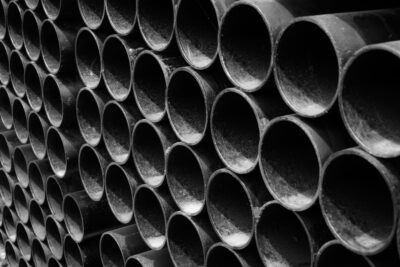
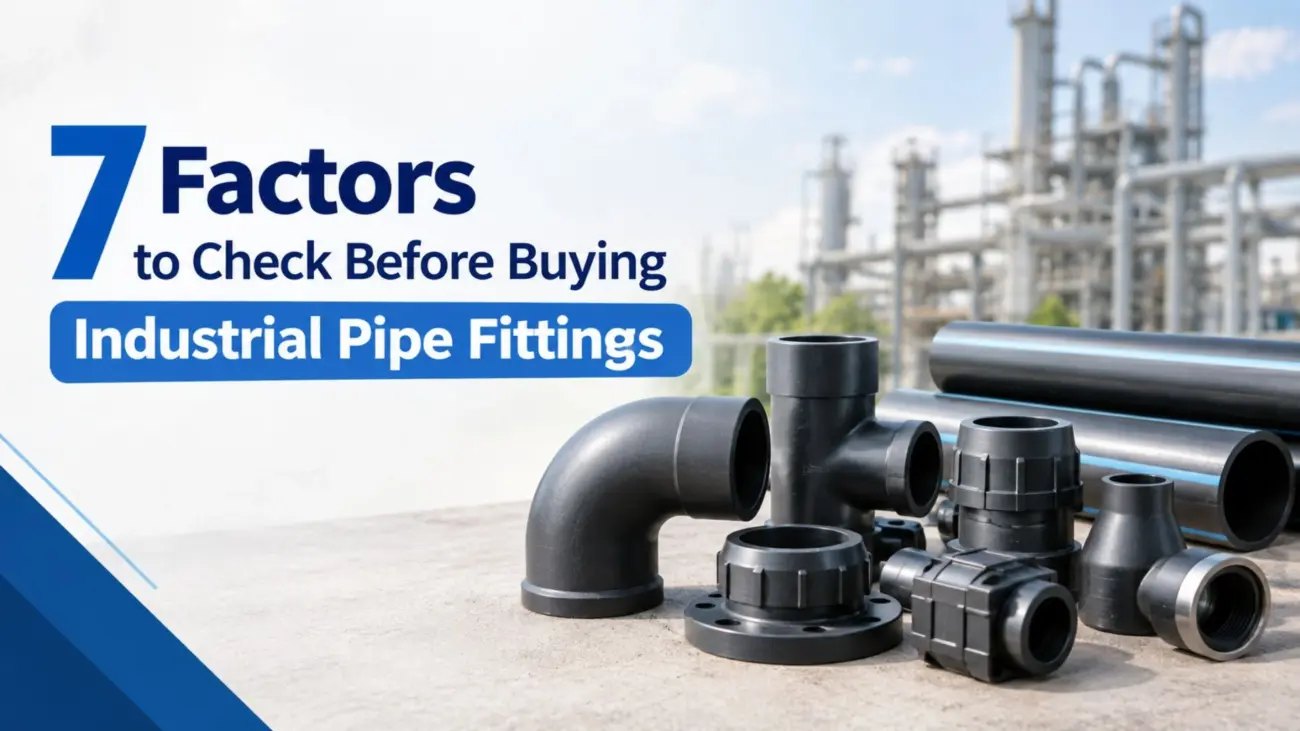
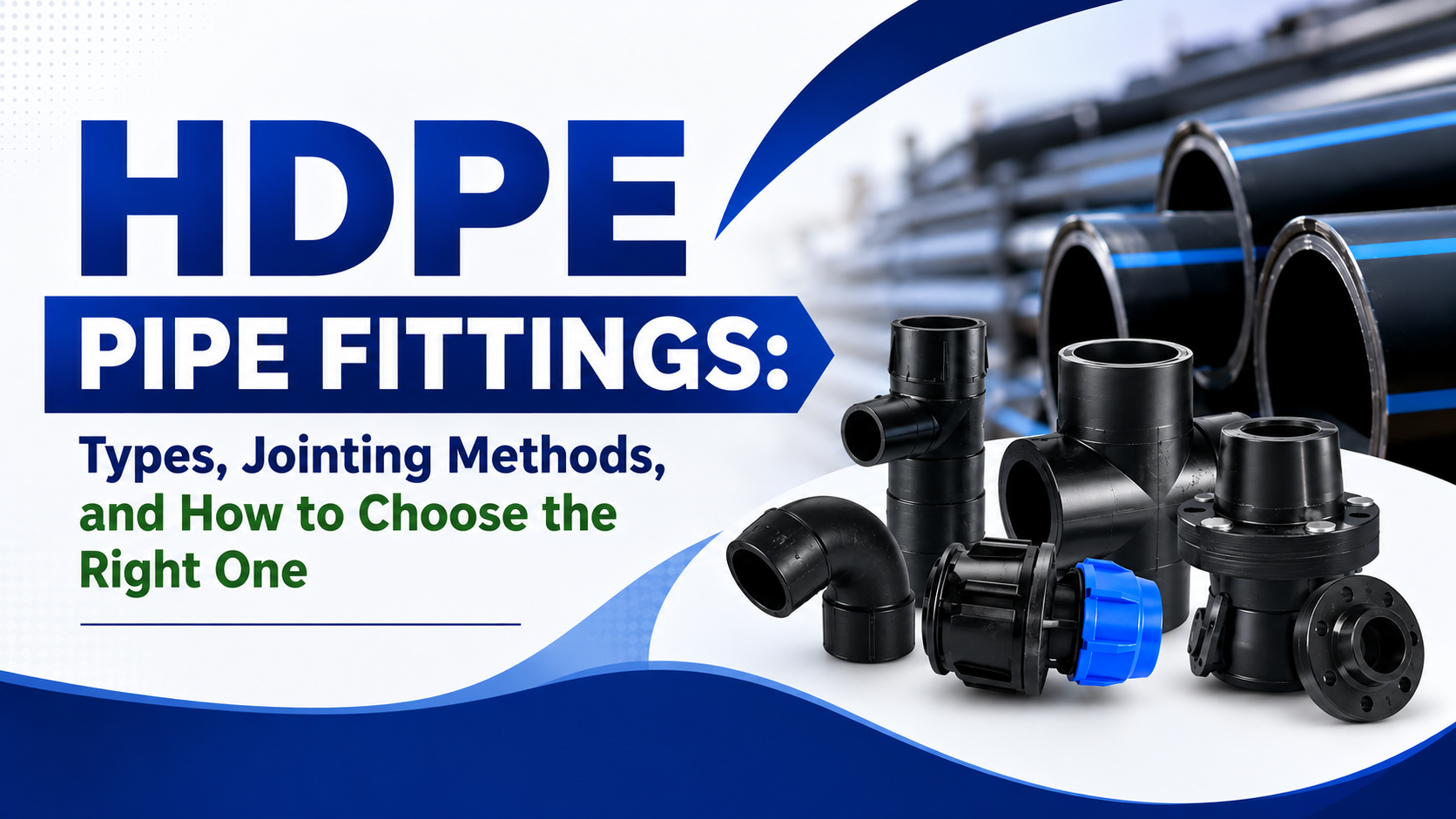
They’re the connection components that turn individual pipe lengths into a working pipeline. Made from the same high-density polyethylene resin as the pipe, these fittings join sections, change direction, branch off lines, reduce diameters, or cap off endpoints.
But here’s what separates a good installation from a problem one: every fitting has to match the pipe’s PE grade (PE80 or PE100), its SDR rating, and its exact outside diameter. Get any of those wrong and you’re looking at a weak joint — even if the fusion bead looks perfect from the outside.
You’ll find them in water mains, gas networks, sewage lines, irrigation systems, industrial plants, and telecom ducting. Basically, wherever HDPE pipe runs, fittings make the system work.
Types of HDPE Pipe Fittings
Not all fittings do the same job. Here’s a breakdown of what each type actually does on site.
| Fitting Type | What It Does | Where You’ll See It |
| Elbows (45° / 90°) | Changes pipeline direction | Every turn in a buried water main |
| Tees (equal / reducing) | Creates a branch off the main line | Service connections, irrigation branches |
| Reducers | Connects two different pipe diameters | Transitions from trunk main to distribution line |
| Couplers | Joins two same-diameter pipes end-to-end | Straight pipeline extensions |
| End Caps | Seals the terminal point | Dead ends, pressure testing |
| Stub Ends + Backing Rings | Connects HDPE to flanged valves or metal pipe | Pump stations, treatment plants |
| Saddle Fittings | Taps into an existing line without cutting | Drip irrigation take-offs, new gas connections |
| Transition Fittings | Bridges HDPE to steel, PVC, or ductile iron | Retrofit projects tying into old metal systems |
One thing worth mentioning -saddle fittings are massively underappreciated. On irrigation projects, they save hours compared to cutting the main line and inserting a tee. And on live gas mains, an electrofusion saddle lets you add a service connection without shutting down supply.
Molded vs. Fabricated -A Decision That Affects Your Budget
Injection-molded fittings come out of a factory mold. Smooth bore, tight tolerances, available off the shelf for standard sizes up to around 315 mm OD. They conform to IS 8008.
Fabricated fittings are cut and welded from pipe sections. You need them when the diameter goes above 315 mm, the angle is non-standard (say, 22.5° or 60°), or the configuration doesn’t exist in a standard mold. They’re made to order and follow IS 7634.
Quick rule: go molded for anything standard. Go fabricated when the mold doesn’t exist for what you need.
How Fittings Connect to Pipe -Jointing Methods Compared
The jointing method matters as much as the fitting itself. Here’s how they stack up.
|
Method |
Size Range | Equipment Needed |
Best For |
| Butt Fusion | DN63 and up | Fusion machine, heater plate, power | Permanent large-diameter mains |
| Electrofusion | All sizes | EF control unit, power | Repairs, gas lines, tight trenches |
| Socket Fusion | DN20–DN63 | Socket heating tool | Small residential and farm lines |
| Compression | Up to ~DN63 | Wrenches only | Emergency repairs, no-power sites |
| Flanged | All sizes | Fusion machine + bolting tools | Valve and equipment tie-ins |
A few things I’ve learned working around these systems. Butt fusion gives you the strongest joint -literally as strong as the pipe wall -but it needs trained operators and a decent power supply. Electrofusion is more forgiving in cramped trenches, and the barcode on every EF fitting means the control unit runs the exact fusion cycle automatically. Compression fittings are a lifesaver when the power goes out on site, but their pressure rating is lower, and most gas codes won’t allow them underground.
SDR and PE Grades -The Compatibility Check Everyone Skips
SDR stands for Standard Dimension Ratio. It’s the pipe’s outside diameter divided by its wall thickness. Lower SDR means thicker walls and higher pressure capacity.
Here’s the part that causes expensive mistakes: the fitting’s SDR must match the pipe’s SDR on any fused joint. An SDR 11 fitting on SDR 17 pipe creates a wall-thickness step right at the weld. That step is a stress concentrator, and stress concentrators are where cracks start.
Same logic applies to PE grades. PE100 fittings go on PE100 pipe. PE80 on PE80. The two grades melt differently and have different long-term creep behaviour, so fusing them together creates a weak boundary. If you absolutely need to connect PE80 to PE100, use a flanged or mechanical connection -no fusion involved, no material mismatch.
Standards That Actually Matter
For projects in India, here are the standards your fittings should comply with.
| Standard | What It Covers |
| IS 8008 | Injection-molded HDPE fittings for potable water |
| IS 7634 | Fabricated fittings (bends, reducers, stub ends) |
| IS 7328 | Threaded transition fittings |
| IS 10146 | Fusion fittings |
| ISO 4427-3 | International standard for PE fittings in pressure systems |
On government tenders, IS 8008 compliance is usually non-negotiable. Check for the BIS certification mark stamped on the fitting before it goes into the ground. I’ve seen unmarked fittings that looked identical to certified ones but failed dimensional checks -the wall thickness was off by enough to compromise the fusion.
Installation Mistakes That Cost Real Money
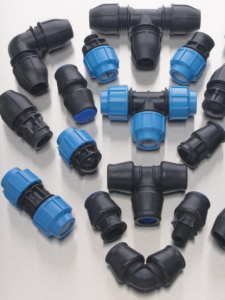
These aren’t hypothetical. They’re the ones that show up repeatedly on job sites.
Not scraping before fusion. The oxidised surface layer on PE prevents a proper molecular bond. Scrape the pipe end and fitting face within 15 minutes of fusing. Not an hour. Not “we scraped it this morning.”
Rushing the cooling cycle. Pulling clamps off before the joint has fully cooled lets the weld deform under residual stress. It might pass a visual inspection and fail the pressure test.
Ignoring EF barcodes. Every electrofusion fitting has a barcode encoding the exact fusion parameters. Manually overriding the control unit -“just set it to what we used last time” -leads to under-fusion or burnt joints.
Mixing grades at the weld. On a busy site with PE80 and PE100 stock sitting side by side, someone grabs the wrong fitting. Always verify the printed markings on both pipe and fitting before the heater plate touches anything.
HDPE vs. PVC vs. Metal -Quick Comparison
| Factor | HDPE Fittings | PVC Fittings | Metal Fittings |
| Corrosion resistance | Excellent | Good (brittle in cold) | Poor without coating |
| Joint strength | Fusion = pipe strength | Solvent cement is weaker | Varies with workmanship |
| Flexibility | High | Low -cracks under shift | Very low |
| Lifespan | 50+ years | 25–50 years | 15–30 years (GI) |
| Weight | Light | Light | Heavy |
HDPE Pipe wins for underground, high-pressure, and chemically tough environments. PVC still makes sense for low-cost indoor drainage. Metal is necessary where fire ratings or extreme temperatures rule out plastic.
Conclusion
Before any fitting order goes out, check these five things: PE grade match, SDR match, exact OD, the right jointing method for the site conditions, and BIS or ISO certification on the fitting body.
That 30-second check is the difference between a pipeline that runs leak-free for 50 years and one that gets dug up in six months. I’ve seen both. The second one is always more expensive than anyone expects.