

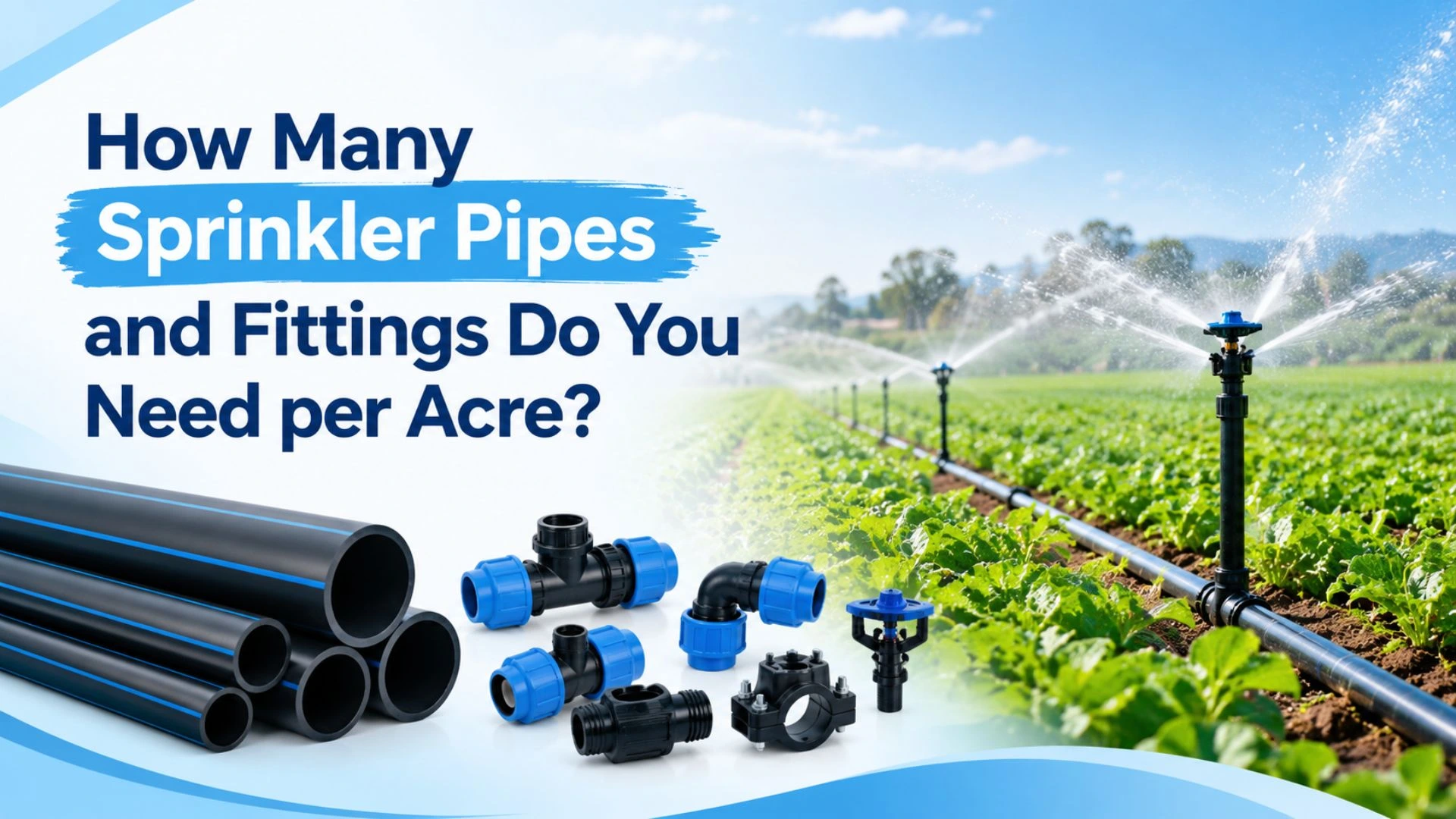
For a square acre of flat land, a portable sprinkler set usually takes 20 to 22 HDPE pipes of 6 m each, five sprinkler heads, five risers and somewhere around a dozen sprinkler pipe fittings. Want every sprinkler fixed for the whole season? Then you’re looking at roughly 60 pipes and 25 to 30 heads. Those figures are a starting point, nothing more. Dealers love selling a “1-acre kit,” and plenty of farmers buy one, lay it out, and then find a dry stripe running down the field between two lateral positions. Usually the kit wasn’t wrong. The field just wasn’t the neat, pump-side acre the kit was built for. Add a couple of missing HDPE sprinkler fittings, a tired pump and heads spaced a little too wide, and the whole thing underperforms. So rather than hand you one number, let’s count it out the way an installer would.
What Actually Decides the Count
Start with the shape of the land. An acre is 4,047 m², about 64 m on each side if it’s square. Very few are. A strip 40 m wide and 100 m long eats up more mainline, though you’ll move the lateral fewer times. Next comes the sprinkler itself. A medium-range impact head throws water 8 to 15 m, but you don’t space them at full throw, because the outer edge of each circle gets very little water.
Then there’s the system type, and this one swings the numbers most. With a portable set you lay one lateral, run it, then carry it to the next spot. A solid-set leaves every lateral in the field all season. Same acre, three times the pipe.
Last, distance. If the borewell sits 30 m from the field edge, that’s five more mainline pipes before you’ve watered a single plant, plus extra friction for the pump to fight. Medium-range heads want at least 2.5 kg/cm² at the far end of the line. A small pump on a long run often can’t manage it, and the usual fix is splitting the acre into two zones. That means one more tee and one more valve on your list.
Counting Pipes and Fittings for One Acre
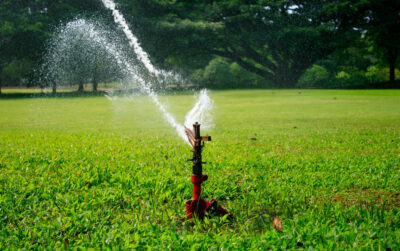
Let’s take a square 64 m × 64 m field, 6 m HDPE pipes, and sprinklers on a 12 m × 12 m grid. The mainline runs along one edge from the pump, so 64 m divided by 6 gives you about 11 pipes. The lateral crosses the field at a right angle and needs 10 or 11, depending on how far in you set the first head. At 12 m spacing you get five sprinklers per lateral and five lateral positions across the field. A portable set walks one lateral through those five spots. A solid-set simply lays all five.
| Component | Portable (1 lateral moved) | Solid-set (all laterals fixed) |
| HDPE pipes, 6 m (63/75 mm) | 20–22 | 60–66 |
| Sprinkler heads | 5 | 25–30 |
| Riser pipes (0.75–1 m) | 5 | 25–30 |
| Couplers with riser outlet | 5 | 25–30 |
| Tee / 90° bend | 1–2 | 5–6 |
| End plugs | 1–2 | 5–6 |
| Pump connecting nipple | 1 | 1 |
| Control valves | 1 | 3–5 |
| Spare rubber seals | 5–10 | 15–20 |
Treat these as working estimates for level ground and a pump that can hold pressure. One thing that surprises first-time buyers: most HDPE sprinkler pipes sold in India already have a quick coupler moulded onto one end. You don’t buy a separate joint for every pipe. The sprinkler pipe fittings in the table are only the special pieces. If your sprinklers throw shorter, the count jumps fast. Organic Mandya’s own 1-acre design at 8–10 m spacing comes to about 49 sprinkler positions, almost twice the 12 m grid.
HDPE Sprinkler Fittings and What They Do
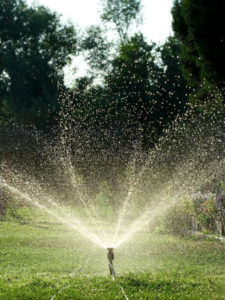
HDPE pipe fittings are what turn a pile of pipes into a working system: the joints, the bends, the outlet for every sprinkler. In sprinkler work nearly all of them are quick-release, and that’s the whole point. One person can unlatch a lateral and drag it to the next position in a few minutes.
| Fitting | Job in the system | Where it goes |
| Quick coupler | Joins two pipes with a rubber seal and latch | Every joint (usually pre-fitted) |
| Riser coupler | Joint with a threaded outlet for the riser | Each sprinkler point |
| Riser pipe | Lifts the head above the crop | Between coupler and sprinkler |
| Tee | Splits mainline into lateral | Mainline–lateral junction |
| 90° bend | Turns the line at corners | Field edges, obstacles |
| End plug | Closes the lateral | Last pipe of each lateral |
| Pump connecting nipple | Links pump outlet to first pipe | Pump end |
| Riser stand | Keeps the riser upright | Under each riser |
When you’re checking an HDPE sprinkler pipe fitting set at the shop, pick up a coupler and work the latch. It should click shut without a fight. Squeeze the rubber ring too. A good one is thick and springy; a cheap one already feels stiff in your hand. Make sure the pressure rating matches your pipes, and look for the BIS mark under IS 14151, the Indian standard for sprinkler pipes and couplers.
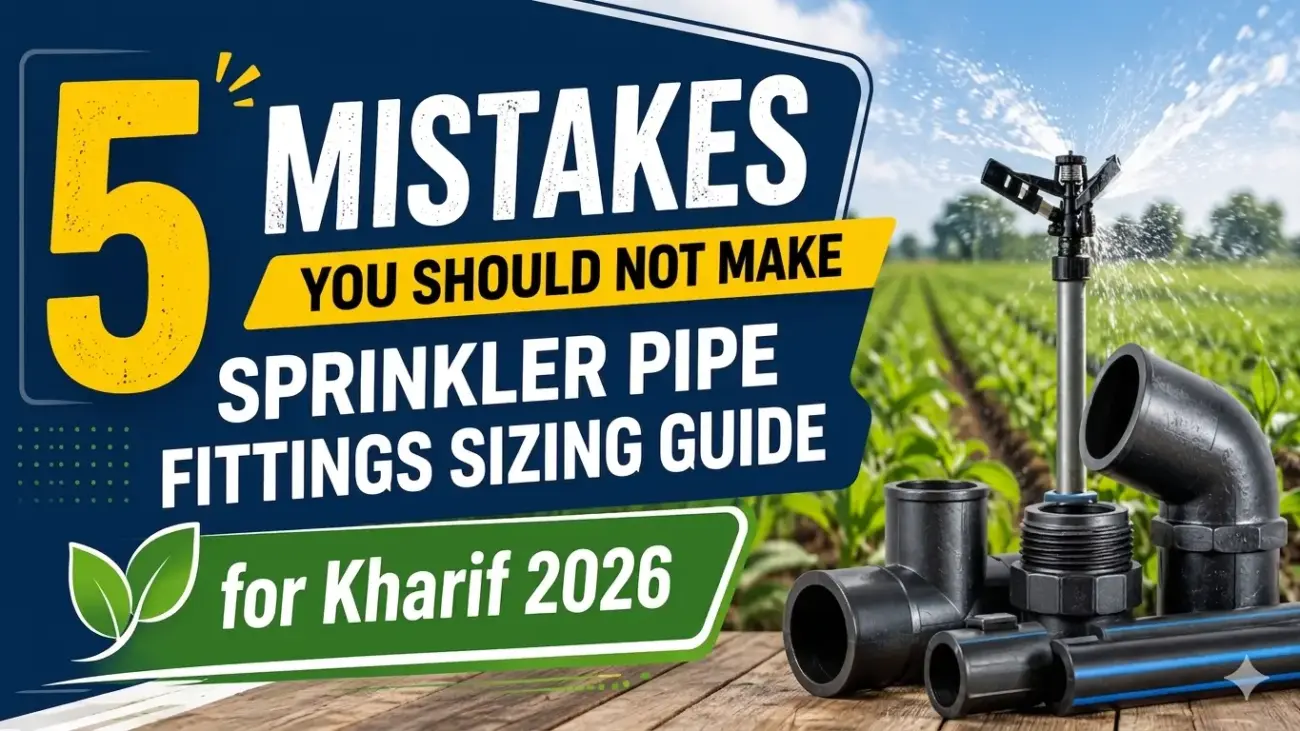
Read Also – 5 Mistakes You Should Not Make Sprinkler Pipe Fittings Sizing Guide for Kharif 2026
A Few Things Worth Knowing Before You Buy
Measure the field yourself. It takes twenty minutes with a tape and saves you from ordering pipes for an acre that doesn’t exist. For most one-acre layouts, 63 mm pipe is fine. Once the mainline gets long, 75 mm earns its extra cost because the wider bore loses less pressure.
Keep a small bag of spares: five rubber rings and one riser coupler. A torn seal in the middle of a dry spell will stop a whole lateral, and the nearest dealer may be a day’s trip away. Run the system at night or before sunrise if you can. According to Organic Mandya, afternoon heat and wind can waste 20–35% more water. And before you pay anything, ask about PMKSY. A set typically costs ₹12,000 to ₹25,000 per acre, and the subsidy covers roughly 45–55% when you buy through an approved supplier.
Where Farmers Usually Go Wrong
The biggest mistake is buying by acreage. A standard kit quietly assumes a square field sitting right beside the pump. Yours probably isn’t.Close behind is hanging too many heads on one lateral. The near sprinklers spin happily while the ones at the far end barely wet the soil. The rest are smaller but still annoying. Couplers from two different brands often won’t lock together properly. Skip the filter on an open well and sand will grind through nozzles and seals within a season or two. And HDPE pipe fittings left out in the sun after harvest slowly go hard at the rubber, so store them in the shade.
Frequently Asked Questions
How many sprinklers do I need for 1 acre?
On a 12 m grid it works out to 25–30 sprinkler positions. Space them at 8–10 m and you’re closer to 49. With a portable set you only buy five heads and move them around.
How many HDPE pipes come in a 1-acre sprinkler set?
Usually 20 to 22 pipes of 6 m for a portable set. Fix every lateral in place and it’s around 60.
63 mm or 75 mm pipe: which should I buy?
63 mm handles most single-acre fields close to the water source. If the mainline runs long, or you might extend to a second acre later, buy 75 mm now and save yourself the upgrade.
What pressure does a sprinkler system need?
Medium-range sprinklers want about 2.5–3.5 kg/cm². Mini-sprinklers get by on 1.5–2.5.
Can I use drip fittings on a sprinkler line?
No. Drip parts are made for thin 16–20 mm laterals at low pressure. They won’t fit sprinkler pipe, and they won’t hold the pressure either. Stick to HDPE sprinkler fittings rated for your pipe.
Is HDPE better than PVC for sprinkler pipes?
For anything you’ll move around, yes. HDPE is lighter, it bends, and it doesn’t crack when dragged over stones. PVC is still a sound choice for a mainline you bury and never touch again.
Final Word
Don’t count pipes from the acreage. Count them from the layout. Measure the field, settle on sprinkler spacing, pick portable or solid-set, then go junction by junction and list the sprinkler pipe fittings each one needs. On a plain square acre, a portable set comes to about 20 pipes and five heads. Anything unusual about your field changes that, and getting the hdpe sprinkler pipe fitting list right before you buy is far cheaper than chasing dry patches mid-season.