

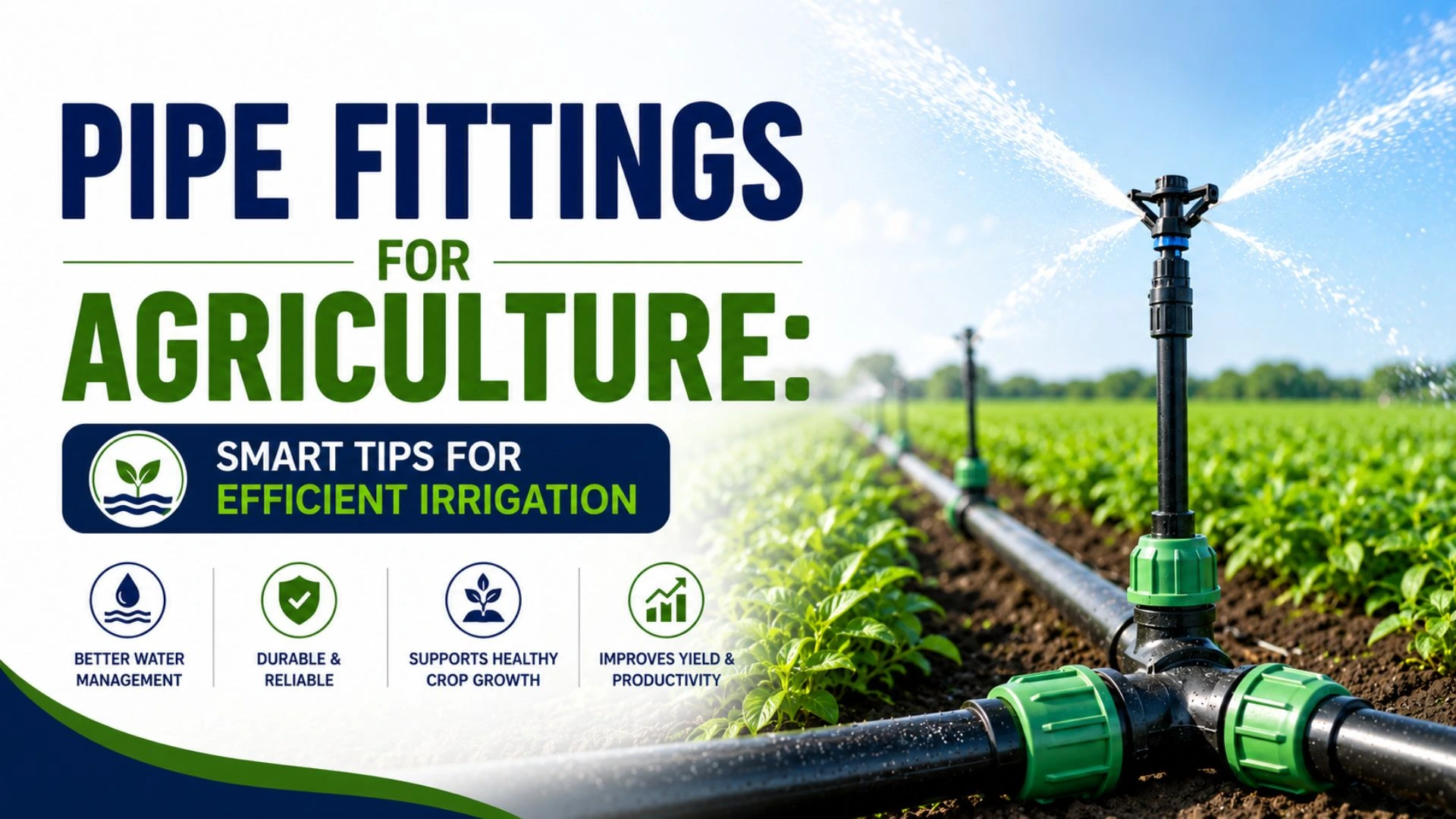
Walk any farm at the height of the season and you’ll notice something odd: the pipe almost never fails. The joint does. A cracked elbow at the head of a sprinkler line. A tee weeping quietly under six inches of soil. A reducer that blew off during the morning’s first pressure surge, soaking half a field while the rest went dry.
After two decades of specifying and troubleshooting irrigation networks, my view is blunt – pipe fittings for agriculture are the cheapest component in the system and the most common reason it stops working. Farmers budget carefully for pipe and pumps, then buy fittings on price alone. That decision quietly costs them a season.
What Are Agricultural Pipe Fittings?
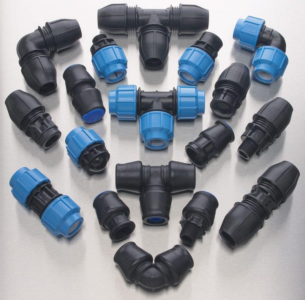
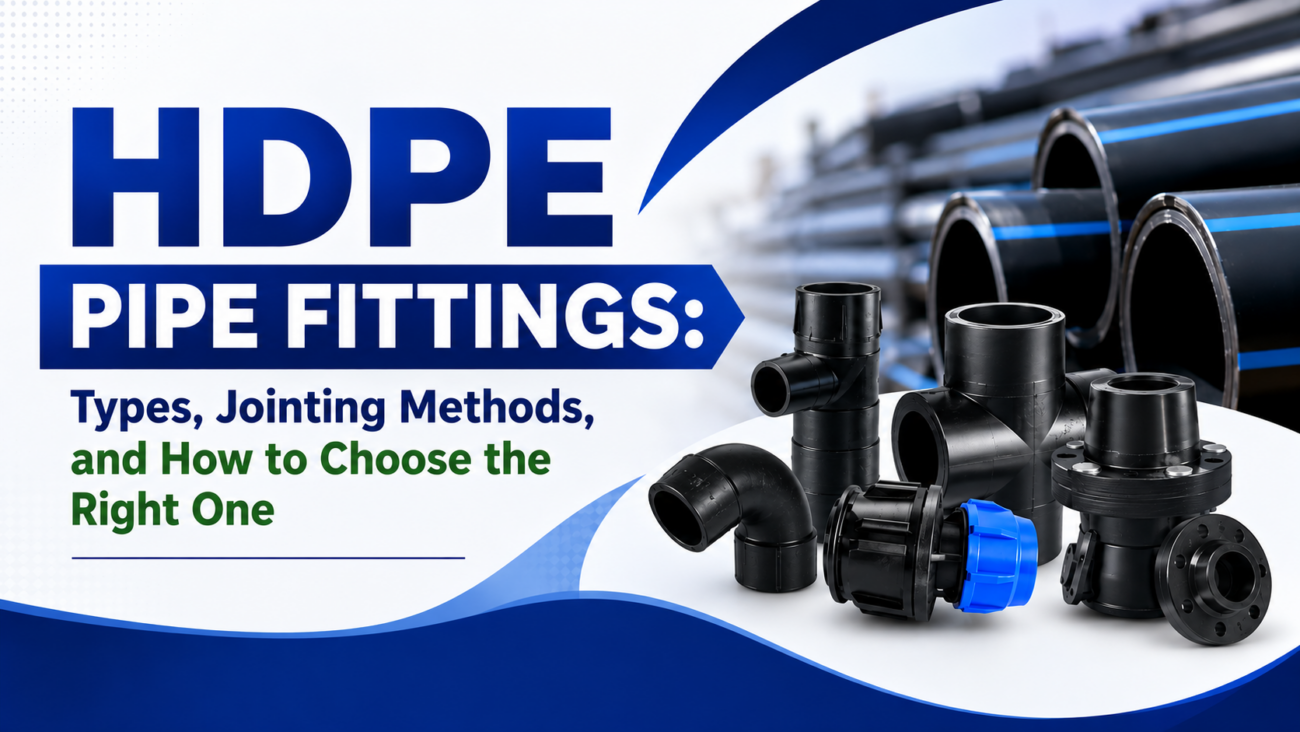
Agricultural pipe fittings are the connectors -elbows, tees, couplers, reducers, bends, end caps and valves -that join irrigation pipes into a working network and control the direction, pressure and flow of water across a field. In modern farm systems, HDPE pipe fittings are the most widely used because they resist UV exposure, fertilizer chemicals, soil movement and the repeated pressure cycling that sprinkler and drip systems create.
Why Fittings Fail Before Pipes Do
Physics, mostly. A straight run of pipe spreads stress evenly along its wall; a fitting doesn’t. Every elbow forces water to change direction, creating turbulence and thrust load exactly where wall thickness changes. Add three field realities:
- Thermal movement. Above-ground HDPE lines expand and contract with the sun. A rigid joint takes the entire load.
- Pressure surge. Starting a pump against a closed valve sends a shock wave down the line. Fittings absorb it first.
- Soil settlement. Buried joints shift as soil compacts through the monsoon. Poorly supported tees crack at the shoulder.
None of this shows up on a spec sheet. It shows up in June, when you can least afford it.
Read Also – Agriculture 2026: Why Sprinkler Irrigation Is Growing Fast in India
Types of Irrigation Pipe Fittings and Where They Belong
| Fitting | Function | Typical Use on Farm |
| Coupler | Joins two pipes in a straight run | Extending mainlines and sub-mains |
| Elbow (90° / 45°) | Changes flow direction | Turning around field corners, riser takeoffs |
| Tee | Splits flow into two directions | Branching sub-mains from the mainline |
| Reducer | Steps pipe down in size | Transitioning mainline to lateral |
| End cap / plug | Seals line termination | Flushing points, future expansion stubs |
| Sprinkler riser | Lifts flow above crop level | Above-canopy sprinkler heads |
| Flange adaptor | Connects HDPE to pump or valve | Pump house, control assemblies |
| Air release valve | Vents trapped air | Line high points, buried mains |
That last one gets ignored constantly. Trapped air in a long buried main causes air-lock, false pressure readings and water hammer strong enough to split a coupler. If your mainline runs over undulating ground, you need air relief at the crests.
Material Comparison: What to Use Where
| Material | Pressure Handling | UV & Chemical Resistance | Lifespan (field) | Best Suited For |
| HDPE | Excellent, flexible under surge | Very good with carbon black | 15–25 years | Sprinkler, drip, buried mains |
| PVC | Good, but brittle in cold | Poor UV unless painted | 10–15 years | Buried, low-movement lines |
| GI (galvanised iron) | Very high | Corrodes with fertigation | 8–15 years | Pump connections, risers |
| Brass / compression | High, precise sealing | Excellent | 20+ years | Control assemblies, small valves |
The reason HDPE fittings for irrigation dominate farm projects isn’t cost -it’s ductility. When soil shifts or a tractor tyre rolls over a shallow line, an HDPE coupler deforms and recovers; a PVC one cracks. For fertigation especially, HDPE pipe fittings for agriculture are the safer call: urea, phosphoric acid and micronutrient blends attack metallic threads over time, while polyethylene shrugs them off.
Systems vs Drip: The Fittings Differ
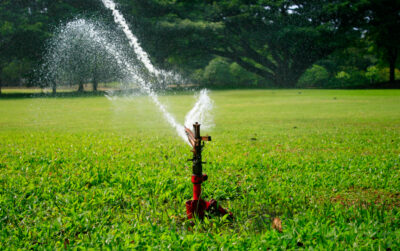
This trips up a lot of buyers. HDPE sprinkler fittings are built for higher operating pressure -typically 2.5 to 4 kg/cm² at the nozzle -and use quick-coupling designs so lines can be shifted between plots. An HDPE sprinkler pipe fitting set usually includes a locking ring and rubber gasket that seals under pressure but releases by hand.
Drip fittings work at a fraction of that pressure but demand far tighter tolerance. A 0.5 mm burr inside a drip connector will trap silt, and within two seasons you’ve got a clogged lateral.
| Parameter | Sprinkler Fittings | Drip Fittings |
| Operating pressure | 2.5–4.0 kg/cm² | 0.8–1.5 kg/cm² |
| Joint type | Quick coupling, gasketed | Push-fit / grommet |
| Reusability | High -designed to be moved | Low -usually permanent |
| Filtration need | Screen filter adequate | Screen + disc/sand essential |
How to Choose Farm Irrigation Pipe Fittings
Match four things, in this order:
- Pressure class before size. A PN 6 fitting on a PN 10 line is a burst waiting to happen. Check the rating moulded into the body -not the box.
- OD, not nominal size. Agriculture water pipe fittings are sold by outside diameter (63 mm, 75 mm, 90 mm). Plumbing fittings use nominal bore. They are not interchangeable.
- ISI marking. For HDPE, look for IS 4984 and IS 8008/8360 compliance. Unmarked fittings are usually recycled resin with filler.
- One manufacturer where possible. Wall thickness and taper tolerance vary between brands, and mixing them is where most slow leaks start.
A field test worth knowing: press your thumbnail hard into the inner wall of a fitting. Virgin HDPE resists and springs back. Heavily recycled material leaves a mark and feels chalky. Crude, but it has saved my clients from bad consignments more than once.
Installation Details That Actually Matter
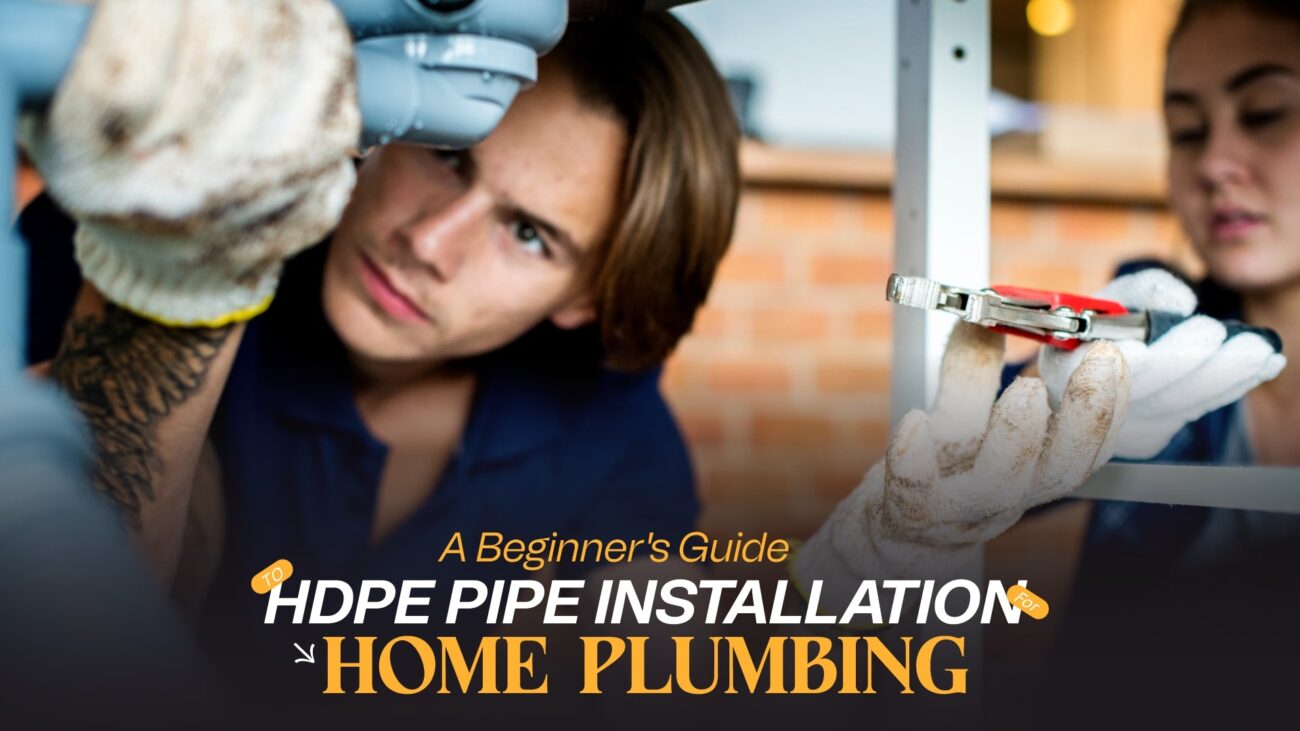
Cut square. A cut 5° off leaves a gap on one side of the socket, and that gap becomes a leak under cycling load. Use a pipe cutter, not a hacksaw, and chamfer the edge.On compression fittings, wet the pipe end with plain water -never oil or grease, which degrade the gasket. Push until the pipe bottoms out; a half-seated joint will pass a pressure test and fail three weeks later.Then pressure-test at 1.5 times working pressure for an hour before backfilling. Always. Digging up a buried mainline in a standing crop is a mistake you make exactly once.
Frequently Asked Questions
1. Which pipe fittings are best for agricultural irrigation?
HDPE fittings are the standard choice for most farm systems because they handle pressure surge, resist fertilizer chemicals and UV, and flex with soil movement. Use GI or brass only at pump connections and control assemblies where rigidity and precise sealing matter.
2. How long do HDPE irrigation fittings last?
Properly installed, UV-stabilised HDPE fittings last 15–25 years buried and 10–15 years above ground. Lifespan drops sharply with recycled material, over-tightened joints or missing thrust support.
3. Can I mix PVC and HDPE fittings in one system?
Yes, using proper transition adaptors -but never by forcing one into the other. The two materials expand at different rates, so a direct joint loosens over temperature cycles.
4. What size irrigation pipe fittings do I need?
Size by flow rate and acceptable friction loss, not by habit. A rough guide: 63 mm for laterals under 1 acre, 75–90 mm for sub-mains, and 110 mm or larger for mainlines above 25,000 litres per hour.
5. Why do my sprinkler fittings keep leaking at the joints?
Usually one of three causes: a hardened rubber gasket, an out-of-square pipe cut, or a joint not seated fully in the socket. Replace gaskets every 2–3 seasons -they cost very little and they’re the first thing to fail.