


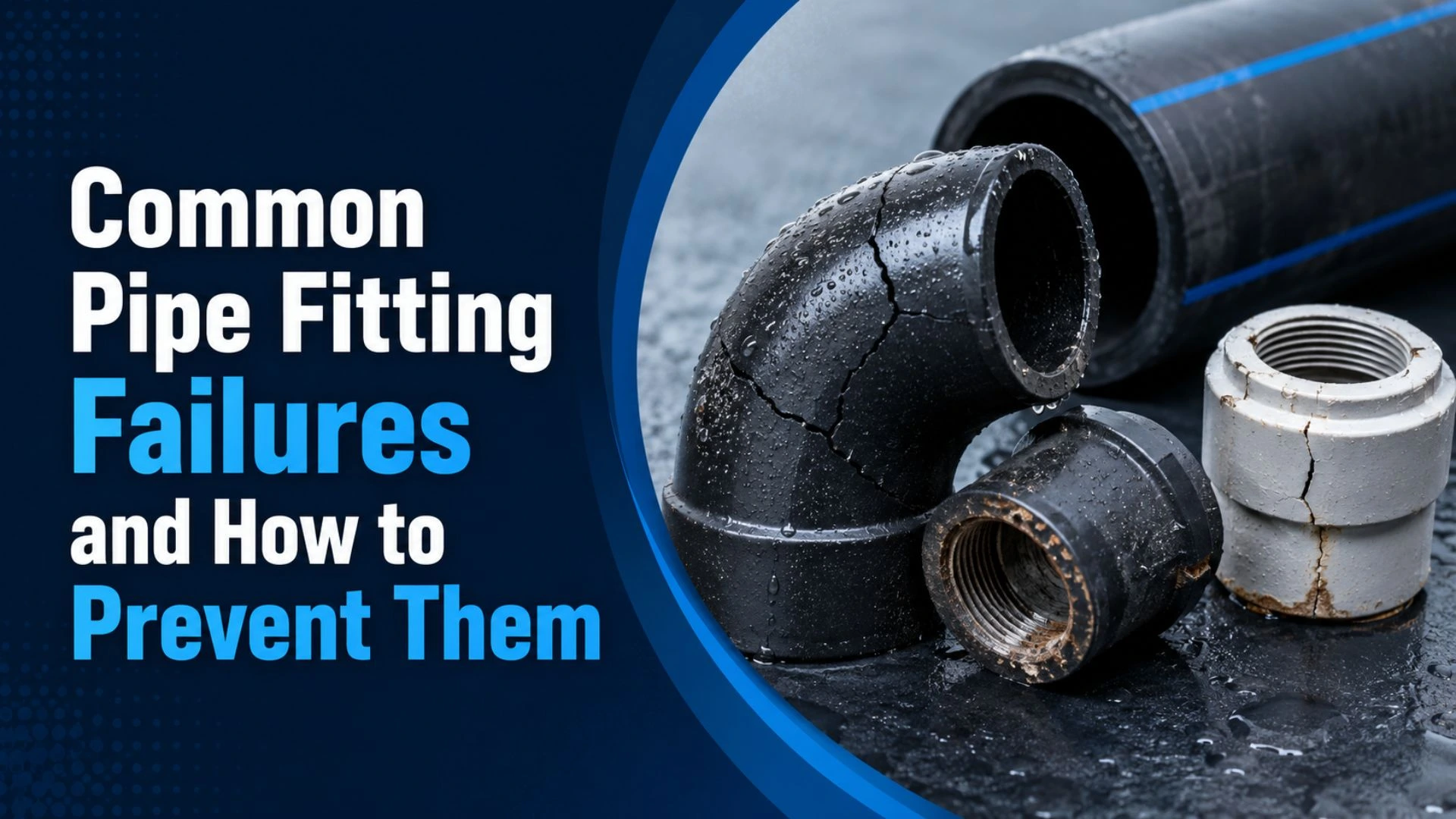
Walk any pipeline commissioning site and you’ll notice something that surprises people outside the trade: the pipe itself rarely fails. The joint does. In two decades of specifying, installing and troubleshooting piping systems -water mains, industrial process lines, plumbing risers in mid-rise buildings -I’ve seen very few pipes burst mid-length without a mechanical reason. What I have seen, repeatedly, is a threaded elbow weeping at 3 a.m., a solvent-welded tee separating under pressure, and an electrofusion coupler that looked perfect and leaked anyway.
Understanding pipe fitting failures is really about understanding transitions: where the material changes, where the direction changes, and where a human being made a judgement call with a wrench.
What Causes Pipe Fitting Failures?
Most pipe fitting failures come from four root causes -poor installation (over-tightening, misalignment, incomplete fusion or cementing), material mismatch, corrosion and chemical attack, and cyclic stress from pressure surges, thermal movement or vibration. Roughly 70–80% of the joint failures I’ve investigated in the field traced back to installation error, not defective components.
Why Fittings Fail Before the Pipe Does
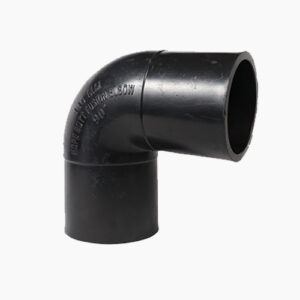
A straight length of pipe carries hoop stress evenly. A fitting doesn’t. At every elbow, tee, reducer or coupling, flow direction shifts and turbulence rises, wall thickness changes, and a mechanical or fused seal must hold. Add thread cutting -which removes material at the exact point of highest bending moment -and you have a natural weak link.
That’s the core of most pipe joint failure analysis: the fitting concentrates stress that the pipe distributes.
The Most Common Pipe Fitting Problems
| Failure Mode | Early Warning Signs | Root Cause | Prevention |
|---|---|---|---|
| Thread stripping / cracked female fitting | Hairline crack at hub, weeping under pressure | Over-tightening, excessive torque on brass or PVC threads | Hand-tight plus 1.5–2 turns; use a torque table, not muscle |
| Slow thread leaks | Damp patch, mineral staining, drop in system pressure | Wrong or insufficient sealant, PTFE tape wound backwards | 3–4 wraps clockwise, or anaerobic thread sealant on metal |
| Galvanic corrosion | Green/white deposits, pinholing at the joint | Dissimilar metals joined directly (copper to galvanised steel) | Dielectric union or brass transition fitting |
| Cold joint in PVC | Sudden separation, clean unbonded surface | Insufficient primer, dry cement, cement past working time | Prime both surfaces, quarter-turn on insertion, hold 30 seconds |
| Incomplete electrofusion | Leak at coupler edge, cold fusion indicators | Unscraped oxide layer, contamination, movement during cooling | Scrape 0.2mm minimum, clamp through full cooling cycle |
| Fatigue cracking | Noise, vibration, progressive weeping | Water hammer, unsupported spans, thermal cycling | Arrestors, expansion loops, correct hanger spacing |
| Erosion at elbows | Wall thinning found on UT survey | High velocity, abrasive slurry, tight radius | Long-radius bends, velocity limits, wear-resistant material |
1. Over-Tightening -The Most Expensive Two Seconds
More threaded fittings are destroyed by installers than by service conditions. A tapered thread seals by wedging; each extra turn multiplies hoop stress on the female fitting. Brass and PVC will accept it silently, then crack weeks later. If you take one thing from this article: torque is a specification, not a feeling.
2. Sealant and Thread Errors
PTFE tape wound anti-clockwise unwinds as the joint is made. Tape on a compression fitting (which seals on the ferrule, not the thread) does nothing at all. This is one of the most frequent pipe fitting installation problems on residential jobs.
3. Mismatched Materials and Ratings
A schedule 40 fitting on a schedule 80 line. A PN10 coupler on a PN16 system. A hot-water branch run in a pipe rated for cold service only. Each of these looks fine at commissioning and fails when the system reaches design conditions.
4. Misalignment and Unsupported Weight
Fittings should never be used to pull misaligned pipe into place. That locked-in bending stress never goes away -it simply waits for a pressure surge. Support spacing matters too: a heavy valve hung off an unsupported tee is a pipe leakage cause you can predict months in advance.
Material-Specific Notes
PVC and CPVC: Failures are almost always cementing errors or solvent attack. Common problems with PVC fittings include cracking at over-torqued threads, brittleness after UV exposure, and joints made below the cement’s minimum working temperature.
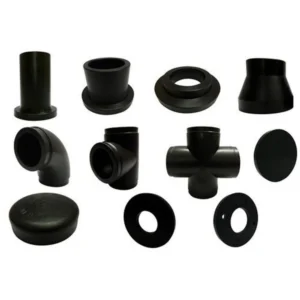
HDPE pipe fittings: Correctly fused HDPE joints are usually stronger than the pipe wall. The failure point is process discipline -scraping, alignment, heat soak time and cooling time.
HDPE electrofusion fittings: Three things cause nearly every failure: an unscraped oxide layer, contamination on the fusion surface, and movement before cooling completes. Log the barcode, the ambient temperature and the cooling time. That record is your defence in any dispute.
Metal (GI, copper, ductile iron): Corrosion dominates -galvanic, pitting from stagnant water, and external corrosion where insulation traps moisture.
Read Also – Pipe Fittings Installation Mistakes and How to Avoid Them
Pipe Fitting Maintenance: A Practical Schedule
| Interval | Action |
| Monthly | Visual walk-down of accessible joints; look for staining, damp insulation, corrosion |
| Quarterly | Check hangers, guides and expansion joints; verify no fitting is bearing dead weight |
| Annually | Pressure log review, ultrasonic thickness at high-velocity elbows, valve exercising |
| 3–5 years | Water chemistry review; sample cut-outs on critical fused joints |
Small point, big payoff: photograph and label every buried or concealed joint before backfilling.
Common Mistakes I Still See
- Using a fitting to correct alignment instead of a proper pipe cut
- Reusing compression ferrules
- Skipping primer on PVC because “the cement has primer in it” (it doesn’t)
- Testing at working pressure only, never at the specified test pressure
- Choosing fittings on price when the failure cost is a shutdown
Frequently Asked Questions
What are the common problems with pipes?
Leaks at joints, corrosion and scaling, blockages, freeze damage, wall thinning from erosion, and cracking caused by ground movement or poor support. Joints and fittings account for the majority of reported leaks.
How many types of pipe fitting are there?
There’s no single fixed number, but fittings group into functional families: elbows and bends (direction), tees, crosses and wyes (branching), couplings, unions and nipples (connection), reducers and bushes (size change), caps and plugs (termination), and flanges (bolted joints). Each exists across threaded, welded, fused, compression, push-fit and grooved connection types.
What are common causes of water pipe failures?
Corrosion, freezing, excessive water pressure or water hammer, ground movement and settlement, tree root intrusion, poor installation workmanship, and simple age. In municipal networks, corrosion and pressure transients lead the statistics.
What are the common problems with PVC fittings?
Cold or dry solvent joints, cracking from over-tightened threads, UV embrittlement in exposed runs, softening or deformation above the temperature rating, and chemical attack from incompatible fluids or the wrong lubricants.
What is a plumbing problem?
Any fault that stops a plumbing system from safely delivering or removing water -leaks, blockages, low pressure, drainage backups, contamination risk from cross-connections, or water heater faults. Most begin small and become expensive because early warning signs get ignored.
Final Thoughts
Preventing pipe fitting failures isn’t complicated, but it is unforgiving. Specify the right fitting for the pressure, temperature and fluid. Prepare surfaces properly. Torque to a number. Support the pipe so the fitting only has to seal, never carry. And keep records, because the joint you can’t see is the one that will teach you the most expensive lesson.
Systems don’t fail suddenly. They fail slowly, then all at once -and the warning was almost always visible at the fitting.