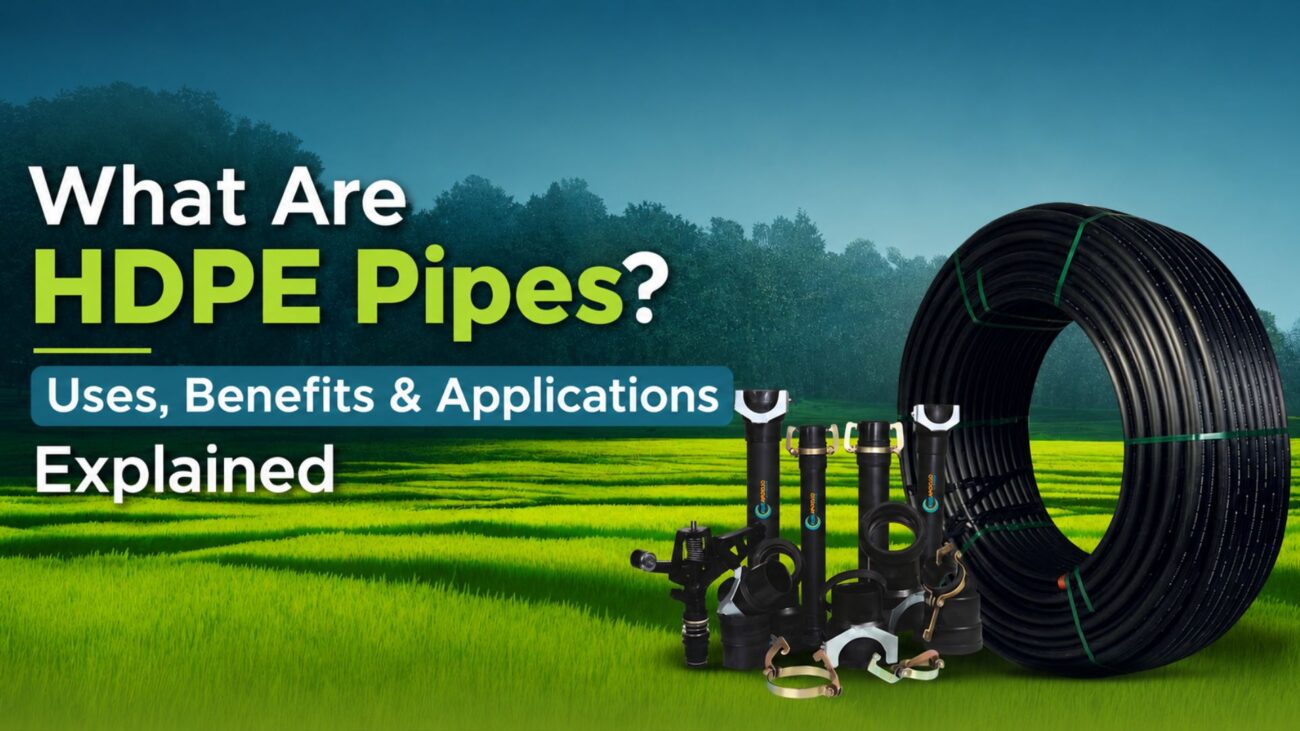


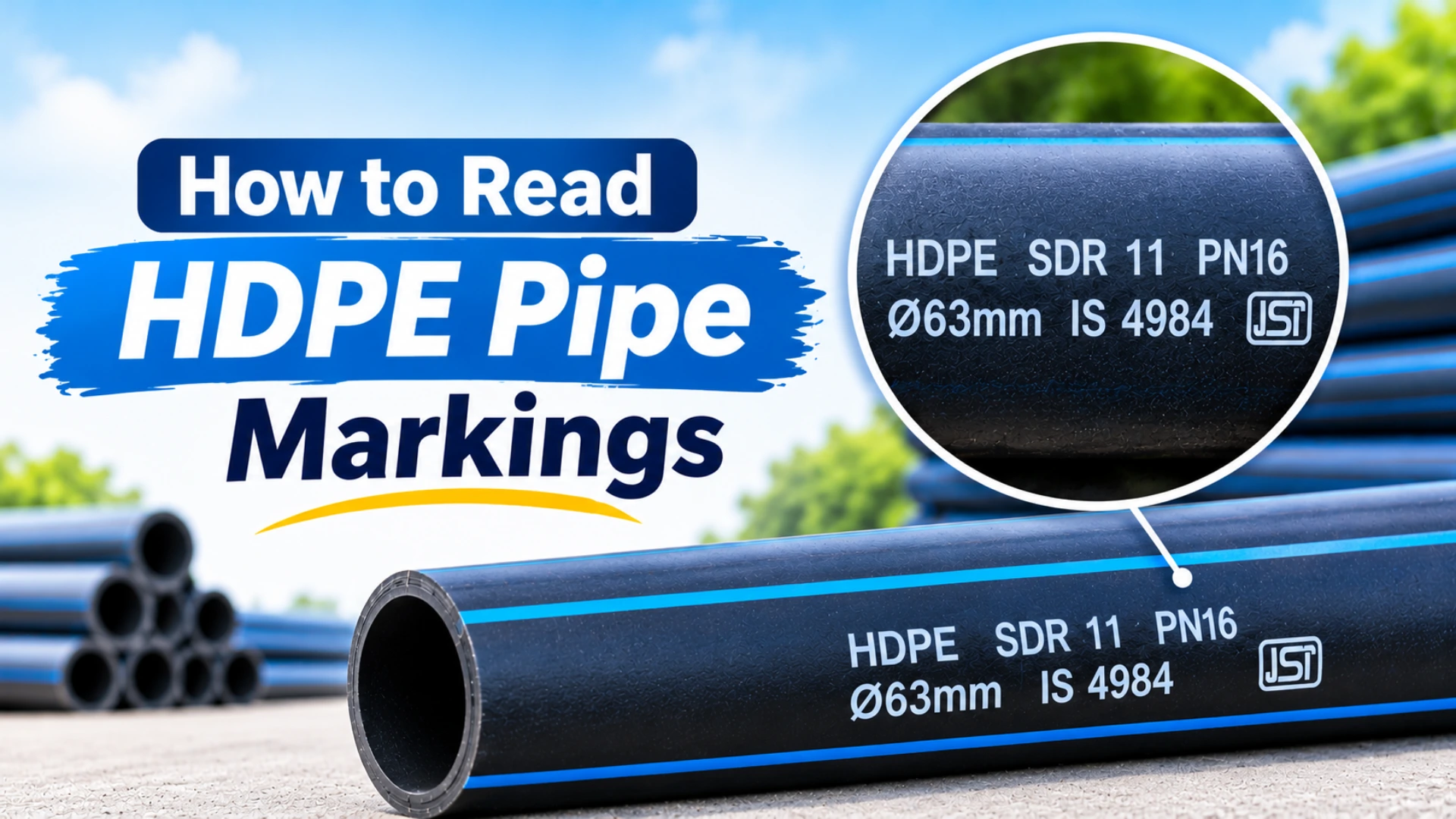
A truck unloads 40 lengths of black pipe at your site. Each one carries a line of white text like “PE 100 PN 10 DN 110 SDR 13.6 IS 4984” followed by a string of numbers. That line is the pipe’s ID card. HDPE pipe marking tells you the material grade, pressure rating, size, wall thickness, the standard it was made to, who made it and when. This guide shows you how to read each part, on pipes and on HDPE pipe fittings, and what to reject.
What does the HDPE pipe marking mean?
The marking on an HDPE pipe identifies the pipe completely. Under IS 4984:2016, each pipe must carry the manufacturer’s name or trade-mark, the pipe’s designation (material grade, pressure rating, outside diameter and SDR) and a lot or batch number. ISI-certified pipes also carry the ISI mark with the IS number and a CM/L licence number.
Here’s a typical printed line, broken down. The brand and numbers are illustrative.
BRANDX HDPE PE 100 PN 10 DN 110 SDR 13.6 IS 4984 [ISI] CM/L-XXXXXXXXXX 2026 11 15 M02 B
| Marking | What it tells you | What to check |
| BRANDX | Manufacturer’s name or trade-mark | Matches the supplier’s invoice and test certificate |
| PE 100 | Material grade. The number comes from the resin’s Minimum Required Strength (PE 100 = 10 MPa, PE 80 = 8 MPa, PE 63 = 6.3 MPa) | Matches the grade in your tender or PO |
| PN 10 | Nominal pressure in bar. PN 10 means a rated working pressure of 10 bar | Equal to or higher than your system’s design pressure |
| DN 110 | Nominal outside diameter in mm | Matches your fittings and drawings |
| SDR 13.6 | Standard Dimension Ratio: outside diameter ÷ wall thickness | Same SDR as the fittings you’ll fuse to it |
| IS 4984 | The Indian Standard the pipe claims to meet | IS 4984 for water supply. IS 14885 is gas, IS 14333 is sewerage |
| ISI mark + CM/L number | BIS certification and licence number | Verify the CM/L number in the BIS Care app |
| 2026 11 15 M02 B | Lot/batch number: year, month, day, machine number, shift | Matches the batch on the test certificate |
IS 4984 sets the designation order as grade, then PN, then diameter, then SDR. Amendment No. 1 (2018) gives the standard’s own example: “PE 80, PN 5, DN 200, SDR 26”. The same amendment fixed the batch number format as year, month, day, machine number and shift, so a failed pipe can be traced to the exact extrusion line and shift that made it.
Many manufacturers also print running length marks (for example, every metre) on coils. These are a convenience, not something IS 4984 requires, but they make it easy to check you got the length you paid for.
How do PE grade, PN and SDR fit together?
You can’t read pressure from SDR alone. The same wall thickness ratio gives a different pressure class depending on the grade, which is why the marking shows both. A PE 100 SDR 11 pipe is rated PN 12.5. A PE 80 SDR 11 pipe is rated only PN 10.
This table is from IS 4984:2016 (Amendment No. 2), rated at 27 °C:
| SDR | PE 80 | PE 100 |
| SDR 26 | PN 4 | PN 5 |
| SDR 21 | PN 5 | PN 6 |
| SDR 17 | PN 6 | PN 8 |
| SDR 13.6 | PN 8 | PN 10 |
| SDR 11 | PN 10 | PN 12.5 |
| SDR 9 | PN 12.5 | PN 16 |
| SDR 7.4 | PN 16 | PN 20 |
So if a pipe says “PE 80 SDR 13.6 PN 10”, something is wrong. By the standard, PE 80 at SDR 13.6 is PN 8. A marking that doesn’t add up is a reason to stop and ask the supplier, before the pipe goes into the trench.
What markings should HDPE pipe fittings carry?
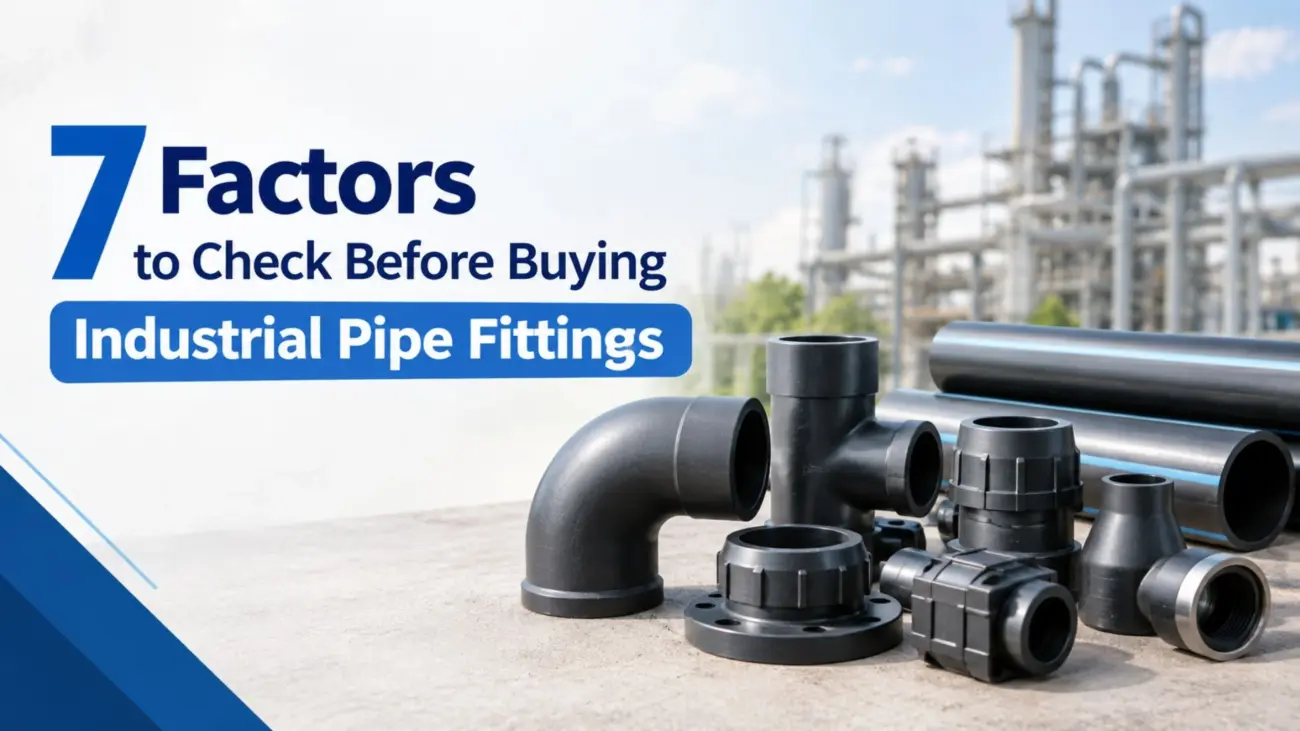
HDPE pipe fittings follow a different standard. Injection-moulded and machined fittings for water supply are made to IS 8008, and fittings fabricated from pipe (mitred bends, segmented tees) are made to IS 8360. IS 8008 (Part 1) requires every fitting to be marked with the manufacturer’s identification, size, material grade and working pressure. A licensed manufacturer may also add the ISI mark.
A fitting has far less space than a pipe, so the marking is usually moulded into the body rather than printed. On a 110 mm moulded tee you might see:
BRAND · 110 · PE 100 · PN 10 · IS 8008
What it means:
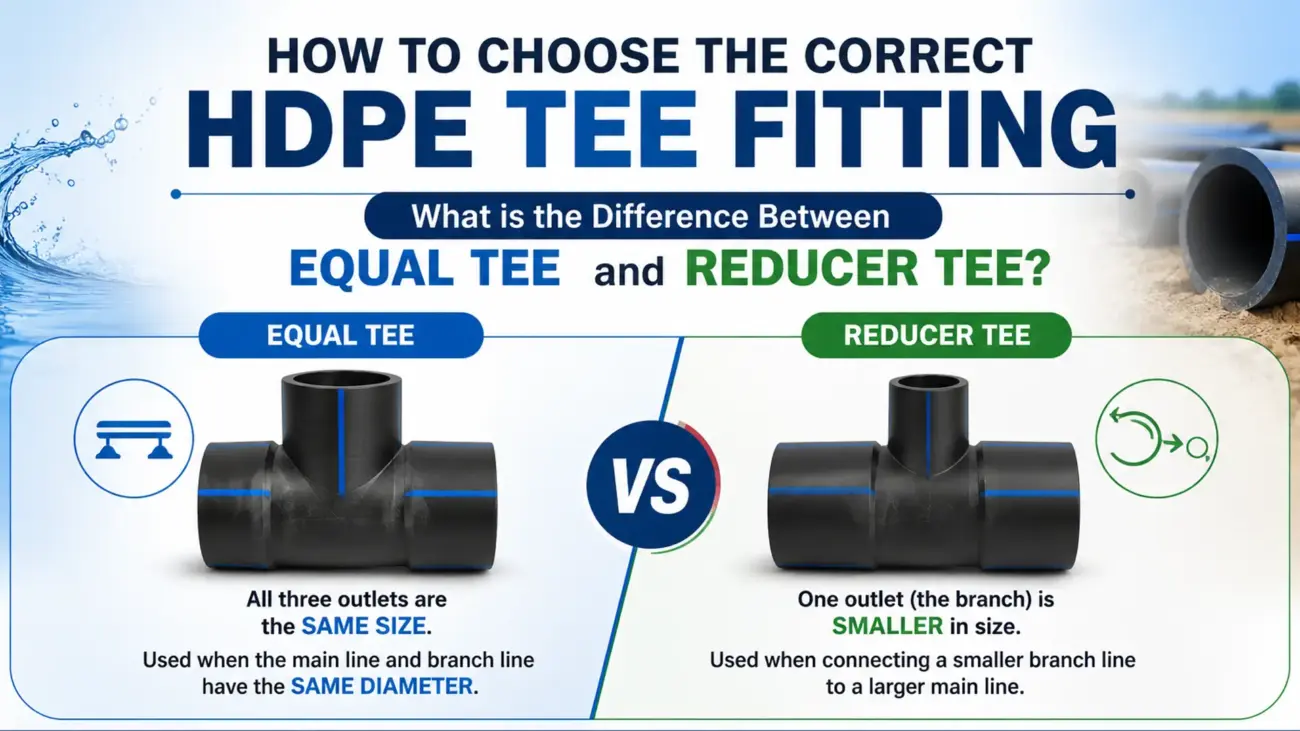
- 110: the outside diameter of the pipe it fits. On a reducer you’ll see two sizes, such as 110 × 63.
- PE 100: the fitting’s material grade.
- PN 10: the fitting’s working pressure.
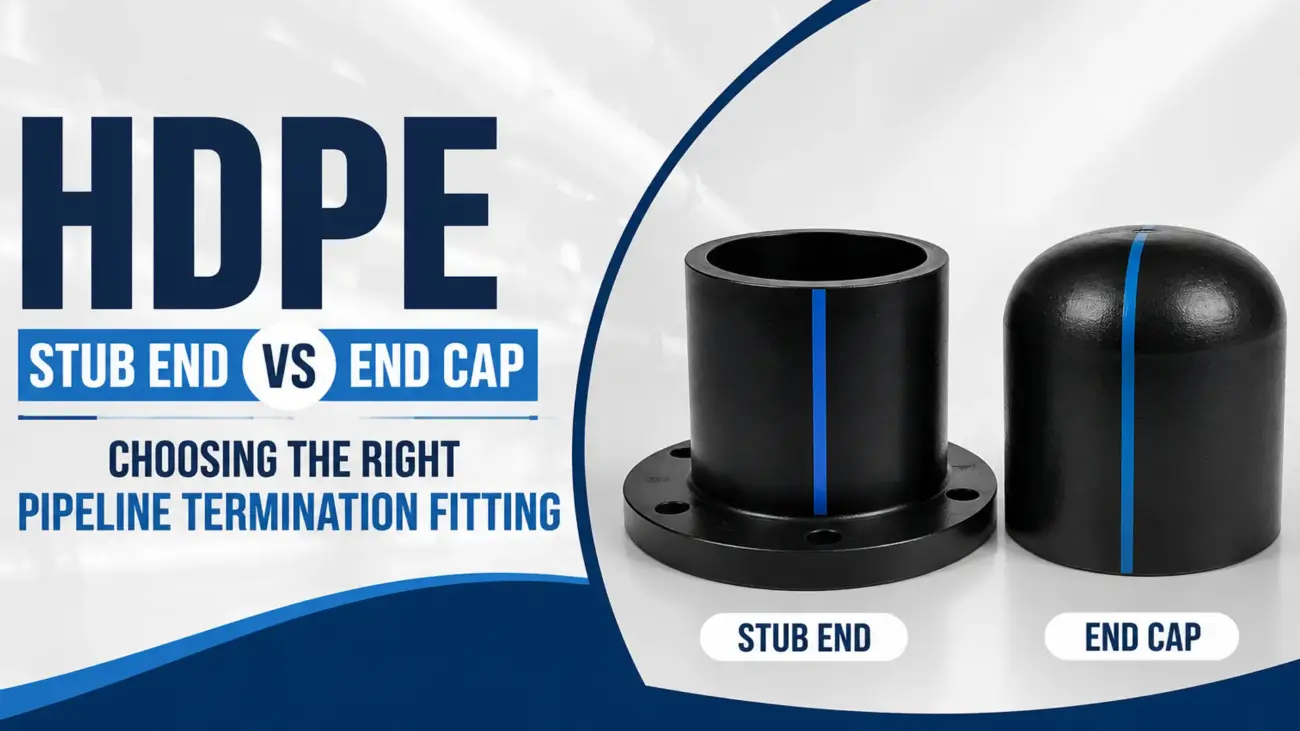
- IS 8008: the standard it claims. For a specific fitting type, the part number tells you more. Part 2 covers bends, Part 3 tees, Part 4 reducers, Part 6 stub ends and Part 9 end caps.
Moulded markings are hard to fake cleanly. If the text on a fitting looks smudged, ground off or stamped on afterwards, treat it with suspicion.
Why the fitting’s marking matters more than you think
Most site teams check the pipe carefully and wave the fittings through. That’s backwards. A pipeline fails at its weakest point, and that’s usually a joint. A PN 6 tee on a PN 10 line turns the whole line into a PN 6 line. For butt fusion, the fitting’s spigot must also match the pipe’s outside diameter and SDR, or the joint won’t form a full bead.
How do you check HDPE pipe quality on site?
Read the marking, verify the licence, match pipe to fitting, inspect the surface and keep the paperwork. These five checks take about ten minutes per delivery.
- Read the full marking line. Every element in the table above should be there and legible. A missing PN or a missing batch number is enough to reject a length.
- Verify the CM/L number. Open the free BIS Care app, enter the licence number and check that it’s valid, that it belongs to the brand printed on the pipe and that it covers IS 4984 (or IS 8008 for fittings). A copied ISI mark with a wrong or expired licence is a common trick with cheap pipe.
- Cross-check grade, PN and SDR. Use the table above. The three numbers must agree with each other and with your purchase order.
- Match pipes to fittings. Same outside diameter, same SDR for fused joints, and a fitting PN equal to or higher than the pipe’s.
- Inspect and measure. Look for a smooth, even black surface inside and out, with no blisters, streaks or grooves. Measure the wall thickness at a cut end with a vernier and compare it with the IS 4984 wall thickness table for that size and SDR.
Then ask for the manufacturer’s test certificate for the batch, and file it with your measurement book. If an hdpe pipe fittings supplier can’t produce one for the batch on your site, don’t accept the delivery.
What do poor or missing markings tell you?
Each warning sign below points to a specific risk:
| What you see | Likely problem |
| No batch number | The pipe can’t be traced. If it fails, nobody can say which production run was bad |
| ISI mark but no CM/L number | The mark may be copied. A genuine ISI mark carries a licence number |
| Grade, PN and SDR don’t match the IS 4984 table | Wrong marking, or a pipe made to no standard at all |
| Marking fades when rubbed with a thumb | Low-quality printing, often seen on unbranded pipe |
| Different brand on pipe and test certificate | You may be getting traded stock, not what was quoted |
| Fittings with no grade or PN | You can’t know the joint’s pressure rating |
Reputable hdpe fittings manufacturers want you to read their marking. It’s how they stand behind the product. A supplier who’s vague about the marking is usually vague about other things too.
Frequently asked questions
How do you read pipe markings?
Read the line in order. The manufacturer’s name comes first, then the material grade (such as PE 100), the pressure rating (such as PN 10, meaning 10 bar), the outside diameter, the SDR and the standard (IS 4984 for HDPE water pipes). The ISI mark with its CM/L licence number and a batch number showing the production date, machine and shift follow.
What is the IS code for HDPE pipe fittings?
Injection-moulded and machined HDPE pipe fittings for water supply are made to IS 8008, which has nine parts covering general requirements and specific fittings such as bends, tees, reducers, stub ends and end caps. HDPE fittings fabricated from pipe, such as mitred bends and segmented tees, are made to IS 8360.
How do you check HDPE pipe quality?
Check that the marking shows grade, PN, size, SDR, IS number and batch number, and that grade, PN and SDR agree with the IS 4984 table. Verify the CM/L licence number in the BIS Care app. Inspect the surface for blisters or streaks, measure wall thickness at a cut end, and ask for the batch test certificate.
Which code is used for HDPE pipe?
HDPE pipes for water supply in India are made to IS 4984:2016, the Bureau of Indian Standards specification for polyethylene pipes for water supply. Other codes apply to other uses: IS 14885 for gas supply, IS 14333 for sewerage, and ISO 4427 is the international standard for PE water pipes.
What does PN 10 mean on an HDPE pipe?
PN 10 means the pipe has a nominal pressure rating of 10 bar (about 1.0 MPa), the maximum continuous working pressure it’s designed for at the standard’s rating temperature. Choose a PN equal to or higher than your system’s design pressure.
Conclusion
Put the grade, PN, SDR and IS number in every purchase order, then check them against the marking when the truck arrives. It’s the cheapest quality control you’ll ever do. Arihant Plast manufactures moulded HDPE pipe fittings at its factory in Jaipur and has supplied contractors since 1998. For fittings that match your pipe’s grade, pressure class and SDR, call 9829010745 or email info@arihantplast.in.