

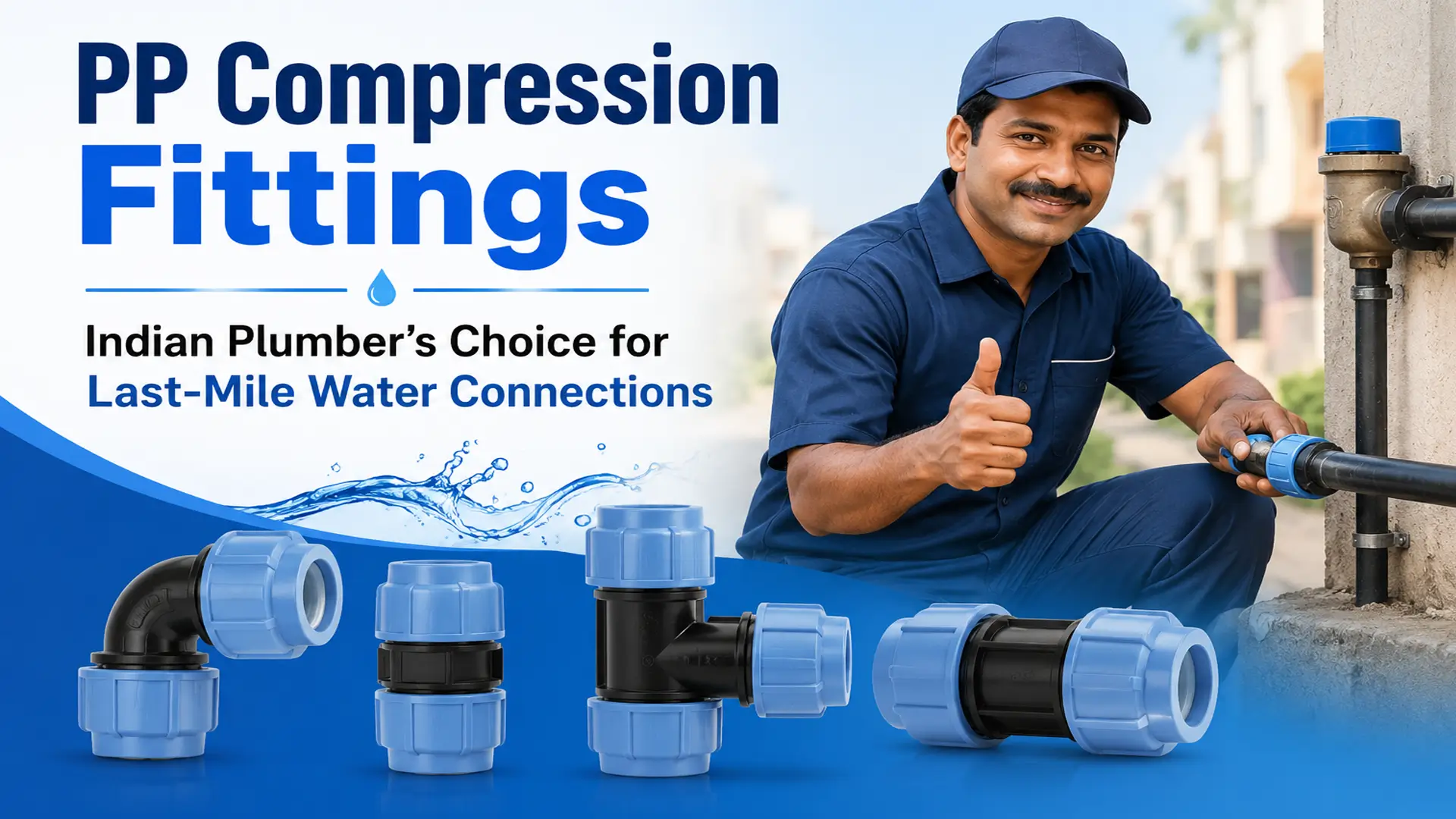
Why Indian Plumbers Prefer PP Compression Fittings for Last Mile Water Connections
Electrofusion couplers or butt fusion elbows are not the most common fitting in the last 50 metres of any water supply system, from the mainline to the tap, or from the submain to the domestic intake. That is a PP compression fit. And there is a very practical explanation for that: compression fittings don’t require any equipment, any electricity, any fusion machine or any qualified welding operator. It takes a plumber less than 5 minutes to make a water tight connection with a pair of hands and a wrench.
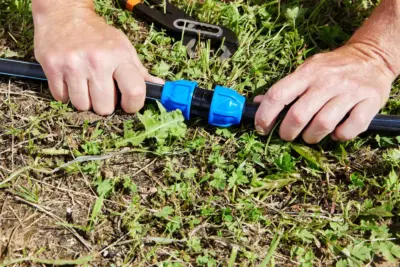
In this tutorial, we’ll explain what PP compression fittings are, where they fit into an HDPE piping system, and what to look for when purchasing them to ensure they will actually hold up under Indian water supply circumstances.
What is a PP Compression Type Fitting?
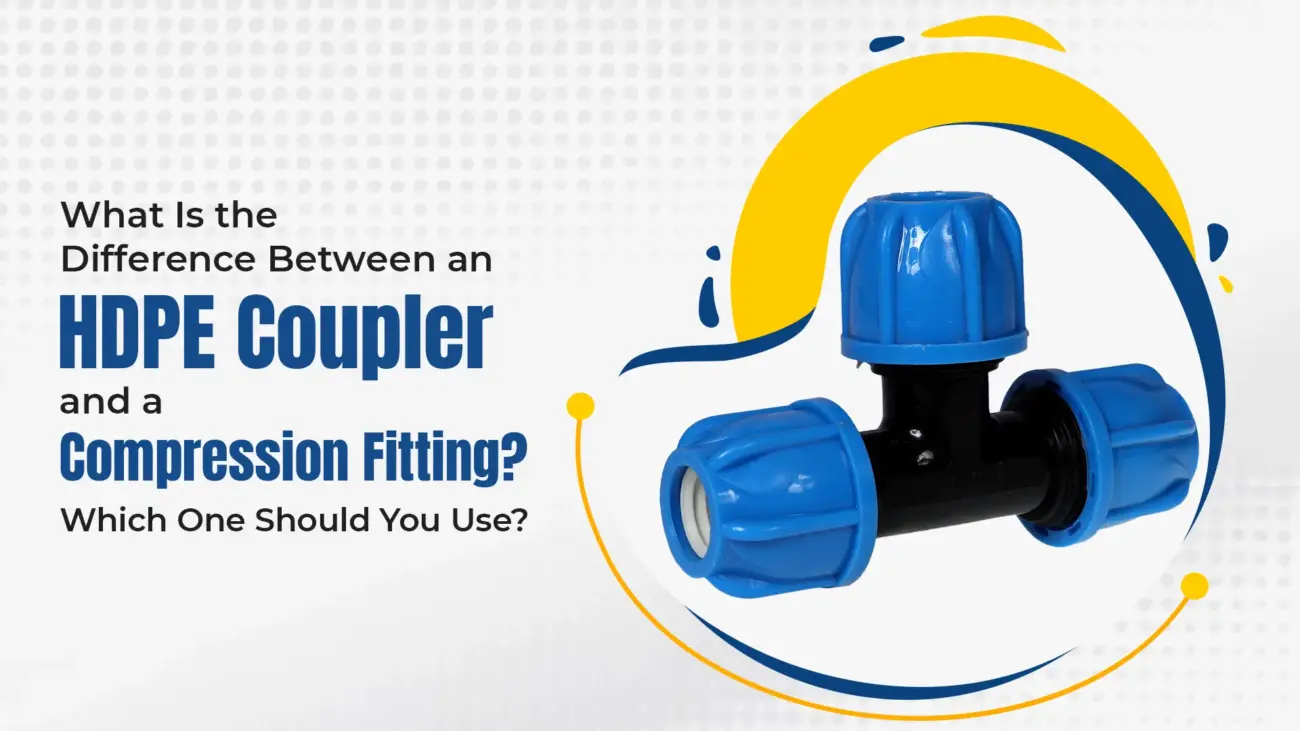
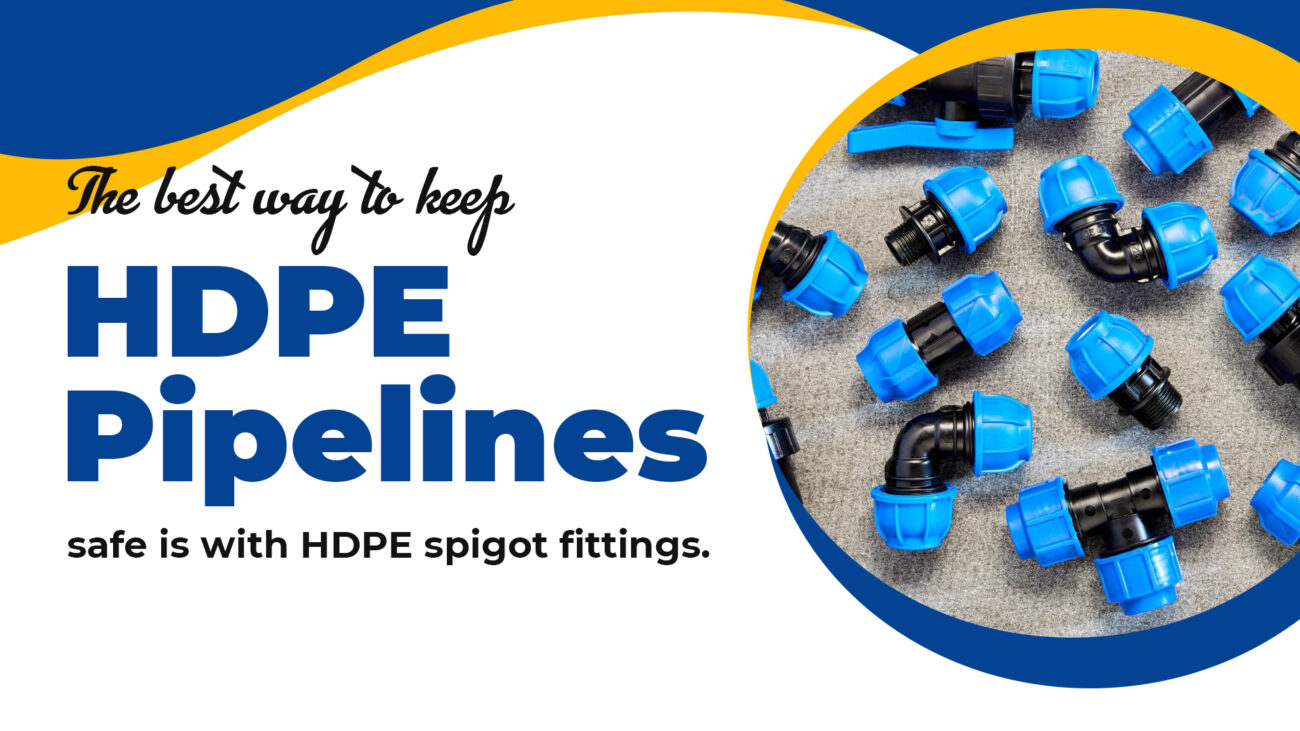
A PP (polypropylene) compression fitting provides a mechanical, watertight seal between two pipe sections by squeezing a grip ring and O-ring seal against the pipe outer surface while a compression nut is tightened. No heat, No power, No glue. Push the pipe into the fitting body . Tighten the nut by hand and then give it another quarter turn with a spanner . The connection is now complete .
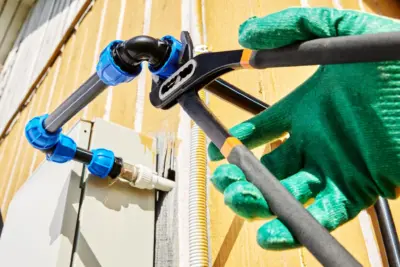
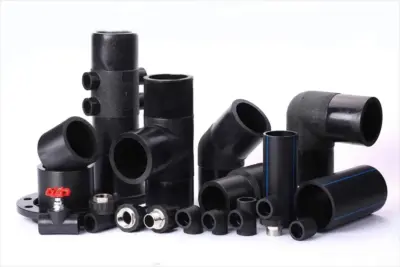
PP compression fittings are made of Polypropylene a thermoplastic material with high chemical resistance, UV stability and dimensional stability over the temperature range experienced in Indian water supply systems. Arihant Plast also makes PP compression fittings to IS 15328 for HDPE and PE pipes from 16mm to 63mm OD.
System Placement of PP Compression Fittings
The most critical design decision in any plumbing or irrigation system is knowing where to use compression fittings and where not to. The hierarchy is simple:
90mm+ large diameter pressurised mains: Electrofusion or butt fusion only. Compression fittings are not rated for pressure for these applications.
Medium diameter submains (63mm-90mm) Electrofusion for permanent underground joints. Compression permissible at lower pressures for above ground accessible joints.
Small diameter service connections and laterals (16mm – 63mm) PP compression fittings are the recommended solution for quick, reversible, tool minimal installation.
Household service connections The household tap point is connected to the 20mm or 25mm service pipe using standard PP compression fittings.
PP compression fittings are the standard specification for the service pipe connections from the meter point to the household tap for FHTC (Functional Household Tap Connection) projects under Jal Jeevan Mission. Arihant Plast supplies these fittings in their comprehensive FHTC Fittings range.
The Internal Mechanism: Why it Works and Why it Doesn’t
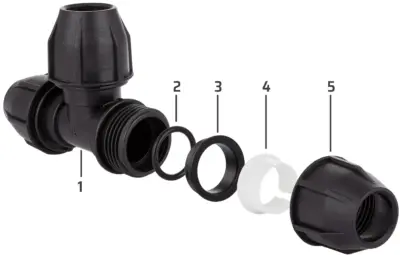
Inside each PP compression fitting there are three parts which provide the seal and grip; the compression nut (provides the clamping force), the grip ring or collet (bites into the pipe OD to prevent pull-out) and the O-ring (provides the pressure seal at the pipe surface). As the nut is tightened, these parts come together against the pipe the O-ring seals and the grip ring locks.
The most common failures of PP compression fittings are: over tightening (crushing the O-ring and distorting the fitting body), under tightening (not enough compression on the O-ring, which will cause a weep leak under pressure), and pipe surface damage (a cut, gouge or burr on the pipe OD will prevent the O-ring from sealing uniformly). All three are preventable with proper installation technique.
What to Look for When Buying PP Compression Fittings
IS 15328 compliant: Indian Standard for PP compression fittings essential for JJM and government water supply projects JJM and government water supply projects EPDM O-rings cover the entire temperature and chemical range of Indian water supply. Avoid inexpensive NBR O-rings in chlorinated water systems because they break down faster
Material of grip ring: Stainless steel or acetal (POM) grip rings sustain bite force under cyclic pressure. The cheap fittings have plastic grip rings that loosen over time
Test pressure rating: Good quality PP compression fittings are certified to a minimum of 1.6 MPa (16 bar) hydrostatic pressure check this against the project operating pressure plus safety factor
Manufacturer certification: ISO 9001:2015 certified manufacturers keep documented O-ring and grip ring quality records between lots
Common Questions
Q:1 Will PP compression fittings work on copper or GI pipes other than HDPE?
Ans: PE (polyethylene) pipes including HDPE can be used with PP compression fittings. So for copper or GI pipes, brass or bronze compression fittings are the right choice. The grip ring bite geometry is made for the softness and surface finish of polyethylene, not metal pipe.
Q:2 What is the maximum operating pressure for a PP compression fitting?
Ans: Standard PP compression fittings are rated for working pressures up to 10 bar (1.0 MPa) for the 20mm–63mm size range. This provides a substantial safety factor for FHTC applications where operating pressure is typically 2–4 bar. Before installation, always check that the pressure rating of the fitting matches the maximum operating pressure of your system.
Q:3 Can I re use a PP compression fitting after I take it apart?
Ans: The fitting body can usually be re used. The O-ring should be inspected for evidence of compression set, cracking or surface damage following disassembly, but replaced if necessary. If you can see bite marks from the old pipe, replace the grip ring, because it may not grab the new pipe as well.
Q:4 How can I stop PP compression fitting leaks in high pressure irrigation systems?
Ans: Most installation failures can be avoided by taking three precautions: cut the pipe cleanly and squarely (not diagonally), make sure the pipe OD is clean and undamaged in the O-ring seating zone, and tighten the nut to the manufacturer’s torque specification typically hand tight plus three quarters of a turn with a spanner. Never use thread tape on compression fittings. It doesn’t assist and it makes it difficult to assemble.