


A burst pipe in the monsoon rarely starts with the rain. It starts with a weakness that was already there: a line buried too shallow, a tired joint, or a pump that slams the system every time the power comes back. You can prevent pipe burst in the rainy season with a few cheap checks and the right fittings. Here’s what to do, whether you’re looking after a house in Jaipur or a farm pipeline in Sikar.
Why do pipes burst in the rainy season?
Pipes burst in the rainy season mainly because waterlogged soil shifts and settles around buried lines, pressure surges from pumps restarting after power cuts hit weak joints, and blocked drains push water back into pipes that were never built for pressure. Rain exposes old, shallow or badly joined pipes. Healthy ones usually survive.
Here are the usual culprits and how to spot each one early.
| Soil settling and erosion | Wet soil loses strength, the pipe sags, and a joint pulls apart | A sunken patch or wet ground on a dry day |
| Heavy loads on soft ground | A tractor, car or water tanker crushes a line under a path or driveway | A leak along a vehicle route |
| Water hammer after power cuts | The pump restarts suddenly and sends a pressure spike down the line | A bang or thud in the pipes when the pump starts |
| Blocked drains and backflow | Drain lines fill up and push water back toward the house | Gurgling floor traps, water rising from bathroom drains |
| Tree roots | Roots chase moisture into small cracks and joints | A recurring leak or slow drain near a tree |
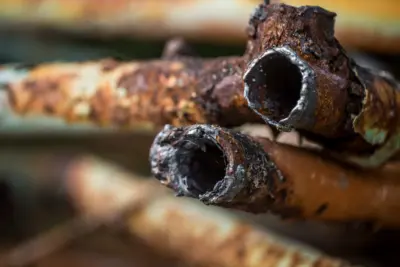
| Rusting GI pipes | Humidity and wet soil speed up corrosion on old galvanised iron | Brown or rusty water from the tap |
8 simple ways to prevent pipe burst in the rainy season
None of these need a big budget. Most take less than an hour.
1. Walk your pipeline route once a week
Spend ten minutes walking the path your pipes take. Look for soggy patches that stay wet after the sun comes out, small sinkholes, or one strip of grass that’s suddenly greener. Catching a slow leak in week one saves you from digging up a burst line in week four.
2. Give buried pipes proper cover and bedding
Pipes laid directly on stones or rubble get pressed into those stones once the soil softens. Bed buried lines on sand or fine soil, and backfill without sharp debris. Lines that cross a driveway, tractor path or road need deeper cover than lines under a garden, and ideally a protective sleeve. Not sure how deep yours is? Dig one small inspection pit and check before the next heavy spell.
3. Stop water hammer at the pump

This is the cause people miss most often. Monsoon storms bring frequent power cuts, and every time the pump stops and restarts, the water column in the pipe slams to a halt or surges forward. That shock travels to the weakest joint.
A few fixes help:
- Fit a non-return valve near the pump so water doesn’t rush backward when it stops.
- Add an air release valve at high points on long lines.
- Open the delivery valve gradually after a restart instead of all at once.
- If the voltage keeps dropping, switch the pump off until supply steadies rather than letting it trip again and again.
4. Clear drains, gutters and floor traps before a heavy spell
Roof outlets, balcony drains and floor traps can carry more water in an hour of monsoon rain than in a normal week. Clear leaves, plastic and silt before the forecast turns heavy. Keep roof rainwater out of the sewer line where you can, since a full sewer pipe pushes water straight back into the house.
5. Inspect exposed joints and wall clamps
Pipes on rooftops and outer walls take a beating. They bake through May and June, then get hit by cold rain and wind. Look for cracked couplers, loose clamps and joints that weep when the tank is full. Any pipe that runs in open sun should be UV-stabilised; ordinary grey PVC gets brittle over a few summers and is often the first thing to crack in a storm.
6. Keep tree roots away from your lines
Neem, peepal and banyan roots travel far looking for moisture, and a leaky joint near a tree is an open invitation. Seal small leaks quickly and use continuous lengths with fewer joints near trees.
7. Replace old GI pipes with HDPE on your next repair
If you’re already digging up a rusted galvanised iron line, don’t replace it with more GI. HDPE pipes are the better choice for monsoon-prone ground because they don’t rust, and they flex with shifting soil instead of cracking. Butt-fused and electrofusion joints turn the pipe and fitting into one piece, so there’s no threaded joint for water or roots to work into. In India, look for HDPE pipes made to IS 4984 and check the ISI mark on the product itself.
8. Keep a small repair kit ready
A burst at 11 p.m. in the middle of a downpour isn’t the time to hunt for parts. Keep these handy:
- Two or three compression couplers in your pipe sizes
- End caps and a couple of clamps
- Thread seal tape
- A torch and gloves
Most important of all: know exactly where your main valve is, and make sure everyone at home knows too.
HDPE vs PVC vs GI: which pipe handles the monsoon best?
HDPE handles the monsoon best of the three, because it combines flexibility with corrosion resistance. PVC works well when it’s buried and protected from sunlight. GI is the weakest choice for wet ground because it corrodes over time.
| Material | Handles ground movement | Rusts in wet soil | Typical joint | Best monsoon use |
| HDPE | Yes, it flexes | No | Butt fusion, electrofusion or compression fitting | Buried water lines, farm pipelines, long outdoor runs |
| PVC / uPVC | Poorly, it’s rigid | No | Solvent cement | Indoor and buried lines protected from sunlight |
| GI (galvanised iron) | Poorly | Yes, over time | Threaded | Short exposed runs only; replace when possible |
What should you check after the monsoon ends?
The end of the rains is the best time to find damage, because the ground is drying out and fresh leaks show up clearly. Before you switch to winter routines or start rabi-season irrigation, run through this list:
- Do a meter test. Close every tap and watch the water meter for 30 minutes. If it moves, something is leaking.
- Look for damp patches on walls, ceilings and around the base of the house.
- Check pump pressure. A pump that takes longer than usual to fill the tank may be feeding a hidden leak.
- Flush the lines. Monsoon silt can settle in pipes and tanks, so open end caps and flush long runs.
- Pressure-check farm and sprinkler lines before the first rabi irrigation, not after.
When should you call a plumber instead of fixing it yourself?
Fix it yourself if the leak is on an exposed pipe and a compression coupler will close it. Call a plumber when the leak is inside a wall, under a floor, near wiring, or keeps coming back. A recurring leak usually means the ground under the pipe has moved.
Frequently asked questions
Can heavy rain cause a pipe to burst?
Rain rarely bursts a healthy pipe by itself. It softens the soil around buried pipes, triggers power cuts that cause pump pressure surges, and overloads drains. Those effects break pipes that were already old, shallow or poorly joined.
How do I know if an underground pipe has burst?
Common signs are a patch of ground that stays wet or sinks, a sudden drop in water pressure, a pump that runs much longer than usual, and a water meter that keeps moving when every tap is closed.
What is water hammer and how do I stop it?
Water hammer is a pressure shock that happens when flowing water stops or starts suddenly, such as when a pump trips during a power cut. A non-return valve near the pump, an air release valve at high points and opening valves slowly after a restart all reduce it.
Are HDPE pipes better than PVC for the rainy season?
For buried and outdoor lines, yes. HDPE pipes flex with shifting soil, don’t corrode, and can be joined by fusion so the joint is as strong as the pipe. PVC is rigid and can crack when the ground settles or after years of sun exposure.
How often should I inspect my pipes during the monsoon?
A quick walk along your pipeline route once a week is enough for most homes and farms. Check again after any unusually heavy rain or a long power cut.
Get your pipelines ready before the next heavy spell
A burst pipe is almost always a slow problem that finally got its chance. Walk your lines, sort out pump surges, and swap failing GI sections for HDPE when you get the chance. If you’re planning a repair or a new line, Arihant Plast has been manufacturing HDPE pipe fittings in Jaipur since 1998, from couplers and saddles to sprinkler fittings. Call 9829010745 or email info@arihantplast.in to get the right fittings for your job.