


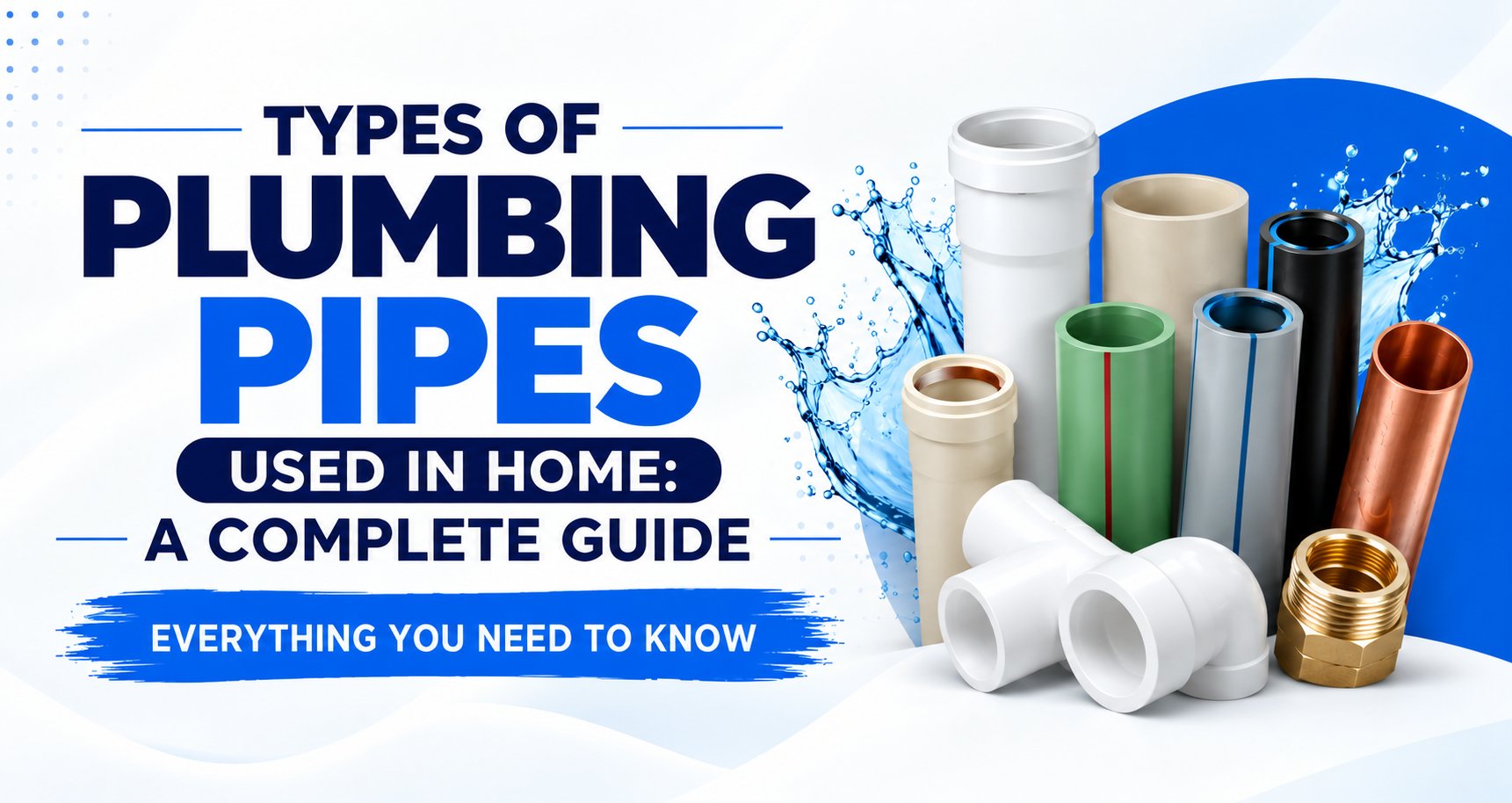
If you’ve ever stood in the plumbing aisle of a hardware store staring at a wall of pipes in white, grey, blue, red, and black, you already know the problem. There isn’t one “right” pipe. There’s a right pipe for your situation -your water pressure, your climate, your budget, and whether you’re running a supply line or a drain.
I’ve spent two decades around residential plumbing projects, from small bathroom remodels to full re-pipes on 40-year-old houses, and the question I get asked more than any other is some version of: “Which pipe should I actually use?” This guide answers that properly. We’ll walk through every major type of plumbing pipe used in homes today, where each one belongs, how pipe fitting works for each material, and the mistakes that turn a simple pipe job into a five-figure water damage claim.
What Pipes Are Used in Homes Today?
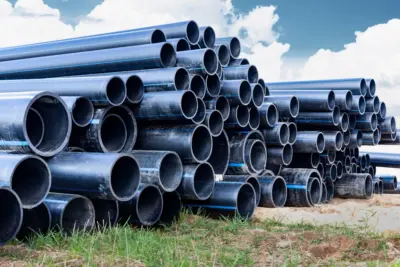
Most modern homes use a mix of PVC or PEX for water supply lines, PVC for drain-waste-vent (DWV) systems, and copper in older homes or where local code still requires it. Homes built before the 1970s may still have galvanized steel or cast iron, both of which are typically due for replacement. Outdoor and underground lines increasingly use HDPE pipe because of its flexibility and corrosion resistance.
Why the Type of Plumbing Pipe You Choose Actually Matters
A pipe isn’t just a tube that moves water from A to B. It has to handle pressure, temperature swings, water chemistry, and decades of wear without leaching contaminants or splitting at a joint while you’re on vacation. Choosing the wrong material -say, using standard PVC on a hot water line rated above its tolerance -doesn’t just shorten its lifespan. It can void your homeowner’s insurance claim if a failure is traced back to improper materials.
This is also why local plumbing codes vary so much. A pipe that’s standard in Texas might be restricted in a colder climate because of freeze-crack risk, or in a coastal area because of water chemistry that accelerates corrosion in metal pipe.
Types of Plumbing Pipes Used in Homes
Here’s a breakdown of the pipe materials you’ll actually encounter, what each is good for, and where it tends to fall short.
1. Polyvinyl Chloride (PVC)
PVC is the workhorse of residential plumbing and for good reason. It is inexpensive, lightweight, corrosion resistant and so simple to work with that many homeowners install it themselves for non-pressurized applications.
Best for: Drain, waste and vent (DWV) lines, cold water supply lines, irrigation.
Not good for: Hot water supply -standard PVC begins to soften and deform at temperatures over about 140°F (60°C), so it isn’t appropriate for lines feeding your water heater.
PVC is rated Schedule 40 and Schedule 80, with Schedule 80 having thicker walls for higher pressures. Joints are made with solvent cement (glue) that chemically welds the pipe and fitting together. Strong, permanent bonds if done properly, slow leaks if not.
Read Also – Pipe Fittings Installation Mistakes and How to Avoid Them
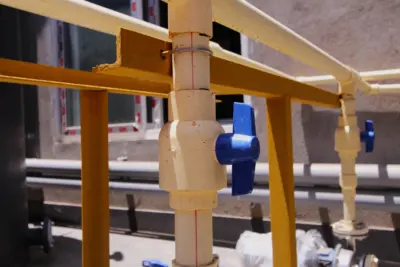
2. CPVC (Chlorinated Polyvinyl Chloride)
CPVC is essentially PVC’s hot water tolerant cousin. The addition of chlorine raises its heat resistance to about 200°F (93°C), making it suitable for hot and cold supply lines throughout the house.
Best uses: Whole house water supply, not wanting PEX but too expensive to use copper.
Note: CPVC is more brittle than PEX and can crack under stress or if installed too rigidly without room for thermal expansion.
3. PEX (Cross-Linked Polyethylene)
If you’ve had plumbing work done in the last decade, there’s a good chance PEX was used. It’s flexible, color-coded (red for hot, blue for cold, white for either) and snakes through walls and joists without the joints that rigid pipe needs at every turn.
Best for: New construction and repiping, especially in homes where running rigid pipe through existing framing would require tearing out drywall.
Real advantage: PEX is more freeze resistant than rigid pipe. Instead of splitting it grows a little. This has saved many homeowners in areas with harsh winters. It is also non-aggressive and will resist scale build up from hard water .
Limitation: It shouldn’t be used outdoors or in direct sunlight -UV exposure degrades it over time. It is also not recommended to be directly connected to a water heater without a short section of a more heat resistant material at the connection point.
4. Copper
For generations, copper has been the standard for water supply lines and in many high-end or historic homes, it still is. It is heat and pressure resistant, and has natural anti-microbial properties to stop bacteria growth inside the pipe.
Best uses: Hot and cold water supply. Especially where longevity is more important than upfront cost. Copper pipe normally has a life of 50 years or more.
Downside: Price. As copper prices are at the mercy of the commodities market, material costs will fluctuate and installation involves soldering (sweating) joints, which requires more skill than gluing PVC or crimping PEX. Copper is also susceptible to a particular failure mode called pinhole leaks, usually caused by water chemistry or stray electrical current in the plumbing system.
5. GALVANISED STEEL (GALVANISED IRON)
Galvanized pipe is most likely to be found in homes built prior to the 1960s-70s. That is a steel pipe with a coating of zinc. Supposed to resist corrosion and a big improvement over plain iron at the time.
The problem now: That zinc coating breaks down over decades and once it does, the steel underneath rusts from the inside. It narrows the internal diameter of the pipe, reducing the water pressure and eventually causing leaks or bursts. Most plumbers will tell you that if your house still has galvanized supply lines, it’s a matter of when, not if, you’ll have to replace them.
6. Cast Iron
Cast iron is heavy, durable, and remarkably good at deadening the sound of water rushing through it -which is exactly why you still find it in DWV stacks in multi-story homes and apartment buildings, even in new construction. It’s rarely used for supply lines anymore, but for drain lines where noise matters, it hasn’t been fully replaced by PVC.
Trade-off: Weight and cost of installation. It also corrodes internally over 50-plus years, developing rough interior surfaces that catch debris and eventually clog.
7. HDPE Pipe (High-Density Polyethylene)
HDPE has become one of the fastest-growing choices for underground and outdoor water lines, and it’s increasingly showing up in residential main water service lines, geothermal loops, and even some interior applications.
Best for: Underground water supply lines, well water lines, and situations where the pipe needs to flex slightly with ground movement without cracking.
Why it’s gaining ground: HDPE pipe is corrosion-proof, resistant to chemical degradation, and comes in long continuous coils, which means fewer joints and fewer potential leak points underground -a big deal when a leak means digging up a yard. It also holds up well under freeze-thaw cycles because it can expand slightly without failing, similar to PEX.
We’ll cover HDPE pipe fitting in detail below, since it works differently from most other pipe materials.
8. Stainless Steel
Less common in standard residential work, stainless steel shows up in coastal homes, marine-adjacent properties, or high-end kitchens and bathrooms where corrosion resistance and appearance both matter. It’s expensive and typically reserved for specific fixtures or short exposed runs rather than whole-house plumbing.
Types of Water Pipes: Supply Lines vs. Drain Lines
It’s worth separating this out, because “types of water pipes” and “types of drain pipes” aren’t interchangeable questions, even though people often use the terms loosely.
Water supply pipes carry pressurized water into your home and to individual fixtures. These need to handle continuous pressure and, in many cases, heat. Copper, PEX, CPVC, and HDPE dominate this category.
Drain, waste, and vent pipes move water and waste out of the house by gravity, not pressure. These don’t need to be pressure-rated, but they do need to resist clogging, corrosion, and -in the case of vent stacks -allow air to flow properly so your drains don’t gurgle. PVC and cast iron are the two most common choices here.
Knowing which category you’re working with is the first filter for choosing the right material, before you even get to brand or price.
Understanding Pipe Fitting: How the Pieces Connect
Pipe fitting refers to the components -and the method -used to join pipe sections, change direction, branch a line, or connect a pipe to a fixture or valve. The fitting method depends almost entirely on the pipe material:
- Threaded fittings -used with galvanized steel and some CPVC; pipe and fitting have matching threads, often sealed with thread tape or pipe dope.
- Solvent-welded (glued) fittings -the standard for PVC and CPVC; the solvent cement chemically melts and fuses the plastic surfaces together.
- Soldered (sweated) fittings -used with copper; the pipe and fitting are heated and joined with melted solder.
- Crimp or expansion fittings -used with PEX; a copper or stainless ring is crimped over the pipe and fitting, or the pipe is expanded and shrinks back around the fitting.
- Push-fit fittings -a newer option (brands like SharkBite) that let you join PEX, copper, or CPVC without heat, glue, or crimping tools -popular for quick repairs.
- Fusion fittings -used almost exclusively with HDPE, covered in detail below.
A mismatched fitting is one of the most common causes of plumbing failure. Every material has its own compatible fitting system, and mixing them without the right transition fitting is asking for a leak.
HDPE Pipe Fitting: What Makes It Different
HDPE doesn’t use glue, solder, or threads the way most other pipes do, because the material itself doesn’t bond well with adhesives and isn’t threaded in the traditional sense. Instead, HDPE pipe fitting relies on heat-based fusion or mechanical compression:
Butt fusion -the ends of two HDPE pipe sections are heated simultaneously and pressed together under controlled pressure, literally melting them into a single continuous piece of plastic. This is the go-to method for larger-diameter HDPE, common in main water lines.
Electrofusion -a fitting with an embedded electric coil is placed over the pipe ends, and an electric current heats the coil to fuse the joint from the inside of the fitting outward. This method is popular where butt fusion equipment isn’t practical, such as tight trenches or repair situations.
Socket fusion -used for smaller diameter HDPE pipe, where the pipe end and fitting socket are heated separately, then pushed together to fuse.
Mechanical/compression fittings -for situations where fusion equipment isn’t available, HDPE can also be joined using compression fittings, though these are generally considered a secondary option compared to a fused joint, since fusion creates a joint that’s often stronger than the pipe itself.
The upshot: HDPE pipe fitting requires specialized tools and training, which is part of why it’s more common in professional installations -municipal water lines, well systems, and new-construction main lines -than in DIY residential repairs.
How to Choose the Right Pipe for Your Home
There’s no universal answer, but here’s the decision framework I actually use on projects:
- Check your local plumbing code first. Some jurisdictions restrict certain materials (PEX in some commercial applications, for example) or require specific fittings for inspection approval.
- Match the pipe to its job. Hot water line? Rule out standard PVC immediately. Underground run? HDPE or properly rated PVC. Drain line? PVC or cast iron.
- Factor in your water chemistry. Highly acidic or mineral-heavy water accelerates corrosion in copper and galvanized steel faster than in plastic pipe.
- Think about who’ll be doing future repairs. PEX and push-fit fittings are far more DIY-friendly than soldered copper, which matters if you plan to handle small fixes yourself down the line.
- Budget for the full job, not just material cost. Copper pipe might cost more per foot, but if labor and fittings are cheaper because your plumber works faster with it, the total project cost can even out.
Common Mistakes Homeowners Make With Plumbing Pipes
Mixing metals without a dielectric union. Connecting copper directly to galvanized steel creates galvanic corrosion, where the two metals react electrochemically and eat away at the joint from the inside. A dielectric union or brass fitting prevents this.
Using standard PVC on hot water lines. It seems like a small shortcut, but repeated heat exposure warps and weakens PVC over time, leading to joint failure.
Skipping the permit and inspection. Especially with re-pipes, an uninspected job can cause real problems when you sell the house, and some insurers will deny claims tied to unpermitted work.
Not accounting for thermal expansion. Rigid pipe installed too tightly, without expansion loops or flexible connectors, can crack as it heats and cools.
Ignoring pipe fitting compatibility. Not every fitting works with every pipe. Using the wrong primer, cement, or crimp ring for the specific pipe material is one of the most common causes of early failure, and it’s often invisible until the joint actually gives way.
DIY-ing HDPE fusion without the right equipment. Because fusion joints need controlled heat and pressure, attempting HDPE pipe fitting without proper tools usually produces a joint that looks fine but fails under pressure.
Expert Tips for a Longer-Lasting Plumbing System
- Insulate exposed pipes in unheated spaces (garages, crawl spaces) regardless of material -this protects against freeze damage even in PEX and HDPE, which tolerate freezing better but aren’t immune to it.
- Insulate exposed pipes in unheated spaces (garages, crawl spaces) regardless of material -this protects against freeze damage even in PEX and HDPE, which tolerate freezing better but aren’t immune to it.
- For DWV lines, stick with PVC or cast iron rather than mixing materials mid-run unless you’re using a proper rubber coupling designed for that transition.
- Keep a record of what pipe material and fitting type was used where -it saves the next plumber (or the next homeowner) real time and money during future repairs.
FAQs
What type of pipe is used in homes?
Most homes use a combination of pipe types depending on the application: PEX or copper for water supply lines, PVC for drain-waste-vent systems, and increasingly HDPE for underground or main water service lines. Older homes may still have galvanized steel or cast iron pipe that’s approaching the end of its service life.
Which pipe is best for a home?
There’s no single “best” pipe for every home -it depends on the application. For water supply, PEX is often the most practical modern choice because it’s flexible, freeze-resistant, and DIY-friendly, while copper remains the premium, longest-lasting option. For drains, PVC is the standard due to its cost, durability, and ease of installation.
Which is better, PVC or HDPE?
It depends on the job. PVC is rigid, cost-effective, and ideal for above-ground or in-wall drain and supply lines. HDPE is flexible, corrosion-resistant, and better suited to underground or long-distance runs where fewer joints and resistance to ground movement matter more. For a typical in-home drain or vent line, PVC is usually the practical choice; for a buried main water line, HDPE often has the edge.
What is the strongest type of pipe?
In terms of pure structural strength and longevity, copper and properly fused HDPE both rank at the top, though for different reasons. Copper resists high pressure and heat over decades, while HDPE’s fusion-welded joints are often stronger than the pipe wall itself, making the pipeline essentially one continuous, seamless piece with no weak points at the joints.
What is the most common plumbing pipe?
PVC is the most widely used plumbing pipe in residential construction today, largely because of its low cost, ease of installation, and versatility across drain, waste, vent, and cold-water applications. PEX has become the most common choice specifically for water supply lines in new construction and repipe projects.
Final Thoughts
Picking the right plumbing pipe isn’t about finding the “best” material in some abstract sense -it’s about matching the pipe to the job, the climate, and the realistic lifespan you want out of your plumbing system. PVC and PEX will cover the vast majority of residential needs affordably. Copper still earns its premium price tag in the right applications. And HDPE is quietly becoming the standard for the underground and main-line work that most homeowners never see but absolutely depend on.
If you’re planning a repipe or new build, walk through the framework above with your plumber, ask specifically what fitting method they’ll use for each pipe type, and don’t be afraid to ask why. A good plumber will have a clear, specific answer for every pipe on your project -not just “that’s what we always use.”