



You’re not alone if you don’t give much thought to the sewer line pipe that runs under your yard. Most people don’t google “types of sewer pipes” until their toilet backs up, their lawn starts to smell suspicious or their plumber hands them a repair estimate that drops their stomach. By then, you’re choosing under pressure, not knowledge.
This guide is going to change that. I’ve been in the business with plumbers, contractors, property inspectors for over twenty years now and I’ve heard the same questions over and over again -what pipe material lasts the longest, why do sewer line pipe fittings go bad before the pipe itself, and is sewer pipe plastic really as dependable as the installers say? We’ll walk you through it all, in plain language, so you can make informed decisions whether you’re building new, replacing old lines, or just trying to understand what’s going on below your property.
What is a Sewer Pipe, and Why Does it Matter?
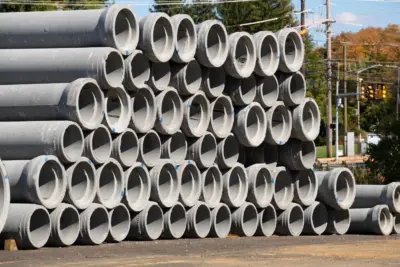
A sewer pipe is an underground pipe that carries wastewater away from a building -everything that goes down your drains, toilets and sinks -to either a municipal sewer main or a private septic system. And that’s exactly why we can take it for granted -because it’s invisible. Unlike a leaky faucet or a cracked window, a failing sewer line won’t announce itself until the damage is extensive.
What surprises many homeowners is that your sewer line isn’t one pipe. It’s a system. A main line, various branch lines, fittings that connect everything together at precise angles and often a cleanout that gives access for maintenance. The first step to avoid an expensive surprise is understanding how these parts work together.
What is a sewer pipeline?
A sewer pipe line is the underground piping system that transports wastewater from a property’s plumbing fixtures to the municipal sewer system or an on-site septic tank. It normally starts at the bottom of the building, runs underneath the yard and hooks up to the main sewer line of the city under the street – or in rural areas, to a septic tank and drain field.
The main sewer line pipe is typically the largest pipe in the system because it must handle the combined flow from all the fixtures in the home. Individual bathrooms, kitchens and laundry areas are fed into it by branch lines. This layout is important because a blockage or break anywhere along that path can impact the whole system, not just one fixture.
Common Sewer Pipe Materials: A Practical Breakdown
Not all sewer pipes are made the same, and the material used often tells you a lot about the age and condition of a property’s plumbing. Here’s what you’ll probably see, in roughly chronological order of oldest to newest technology.
Clay Pipes
For decades, vitrified clay pipe was the standard, especially in homes built before the 1970s. It is resistant to chemical corrosion but is known to be vulnerable to invasion by tree roots -roots find the moisture escaping from the joints of the clay pipe and can crack the pipe wide open over time. If you’ve got an older home, you probably have some clay pipe in your system somewhere.
Cast-Iron
Cast iron sewer pipe was common through the mid-20th century, and is prized for its strength and sound-dampening qualities. The downside is corrosion. For 50 plus years a cast iron pipe may rust and scale on the inside until the effective diameter is so reduced that drainage slows even w/o a visible leak.
Orangeburg Tubing
If you ever hear a plumber groan about “Orangeburg” here’s why. This pipe material was made from compressed wood fiber and coated in tar, and was used mostly between the 1940s and 1970s as a cheaper wartime substitute for metal. It’s well known for collapsing -I’ve seen sections that have gone soft and oval, almost crumbling like wet cardboard when you touch them. If your house was built in that era and the sewer line has never been replaced, it’s worth looking into.
Plastic Sewer Pipe (PVC & ABS)
Modern sewer pipe installations almost universally use plastic, which is no surprise. The two main alternatives are:
PVC (Polyvinyl Chloride): White or cream, rigid and very resistant to corrosion, root intrusion and chemical attack. Schedule 40 PVC is the most common choice for sewer line pipe applications, but SDR-35 is frequently used for underground main runs due to its good combination of strength and cost.
ABS (Acrylonitrile Butadiene Styrene): Black, slightly more flexible than PVC and easier to solvent weld in cold weather. It is popular in some areas, but banned or restricted in others because of local plumbing codes.
The industry standard is now plastic sewer pipe, because it does not corrode, it resists root intrusion far better than clay, and it is much lighter and easier to install than cast iron. It is also cheaper, which is something when you are figuring the cost of a complete line replacement.
Trenchless Lining (Cured-In-Place Pipe)
This is not traditional pipe material -this is a repair method in which a resin saturated liner is inserted into an existing damaged pipe and cured in place, creating a “pipe within a pipe” so to speak. Worth mentioning because this is becoming the preferred way of rehabilitating old clay or cast iron lines without full excavation.
What kind of pipe is used for sewer line applications today?
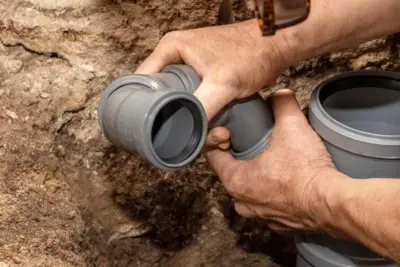
PVC is the most common pipe used for sewer line installation in most residential and light commercial projects. The two most common choices are Schedule 40 PVC or SDR-35 PVC depending on local plumbing codes and depth of burial. Both are in the sewer pipe plastic family and are accepted by most municipal building codes across the country.
That said, “what pipe is used” really depends on where you live and what’s already under the ground. Similarly, a plumber working on a portion of an existing cast iron line might choose a compatible fitting to join PVC rather than ripping out the entire run. This is where sewer line pipe fittings come into play — they are the connective tissue that allows different materials and pipe sizes to work together safely.
What type of pipe is used for sewer main lines?
The main sewer line ( the pipe that takes waste water from your property to the municipal system ) is generally 4 inch or 6 inch diameter PVC ( in modern construction ) . SDR-35 is a common choice for the underground run because it has a thicker wall rating for the burial depth and soil load it will be subjected to . Some jurisdictions still specify ductile iron or reinforced concrete for larger municipal mains in areas with strict frost-line requirements or heavy soil movement but for individual property connections PVC is dominant.
Here’s a quick way to think about it: the deeper and more load-bearing the application, the more likely you’ll find a thicker-walled pipe specification. Your local plumbing code will dictate the exact requirement, so always check with your municipality or a licensed plumber to be sure a DIY replacement meets code.
The Hidden Vulnerability: sewer pipe fittings
Most articles gloss over this, but pipes do not usually blow up in the middle of a straight run. They go wrong at the joints. This makes the fittings for sewer line pipes as important as the pipe material itself, if not more so.
Common Kinds of Fittings You’ll Encounter
- Couplings -Join two sections of pipe of the same diameter either permanently (solvent weld) or with a flexible rubber sleeve (often called a Fernco coupling) for connecting dissimilar materials such as cast iron to PVC.
- Wye fittings -Shaped like the letter Y, these allow a branch line to join the main line at a gentle angle, which keeps solid waste flowing smoothly instead of catching on a sharp corner.
- Sanitary tees -These are used above the waterline for vent connections and differ from standard tees in that they are designed to prevent backflow into branch lines.
- Elbows (bends) -Available in 22.5°, 45°, 90° angles. In general, when space is available, two 45-degree fittings are preferred over one 90-degree turn because the sharper bend increases the chances of clogging.
- Cleanouts -Provide direct access to line for snaking or camera inspection. Every property should have at least one accessible cleanout, and if yours doesn’t, that’s something to flag for a plumber.
- Adapters and transition fittings -Used to connect different pipe materials or diameters together in a safe fashion. Often used when repairing a section of an old system with modern sewer pipe plastic.
Significance of Material and Quality of Fitting
One of the biggest causes of early sewer line failure is using the wrong or pipe fittings. A drain that is properly rated but not properly backfilled, or a drain made of a material that is not compatible with the chemistry of the surrounding soil can crack years before the pipe would have failed on its own. It is important when replacing or adding fittings that the schedule and material rating match the existing pipe and a licensed professional should confirm that the solvent weld or mechanical joint is properly sealed -this is the difference between a repair that lasts decades and one that fails in less than a year.
Sewer Line vs. Sewage Line: What’s the Difference?
This is something people stumble over all the time, so let’s clear it up front.
“Sewer line” and “sewage line” are most often used interchangeably in everyday conversation and most plumbers do not distinguish between them. Technically, “sewage” refers to the wastewater, whereas “sewer” is the system or pipe that transports it. So a “sewer line” is really just casual slang for the same sewer line pipe we’ve been talking about all through this guide. If you hear both terms used in a plumbing estimate, don’t assume they refer to different pipes -ask your contractor to clarify exactly which line they mean if there’s any doubt about scope.
Lifespan of Sewer Lines
Lifespan is very dependent on material, soil conditions and how well the system has been maintained:
| Pipe Material | Typical Lifespan |
| Orangeburg (wood/tar composite) | 30–50 years (often fails earlier) |
| Clay | 50–60 years |
| Cast iron | 75–100 years |
| PVC / ABS (sewer pipe plastic) | 50–100+ years |
Modern plastic sewer pipes tend to be better than the older materials because they resist corrosion and root intrusion much better. That said, a PVC line with good ratings can still fail early if it was poorly installed, if the fittings weren’t sealed properly or if a joint cracked due to shifting ground. Age is a rough guide but only a camera inspection will give you the true condition of your line.
Signs Your Sewer Line Needs Repair
Here are a few warning signs that are worth acting on before they become a full backup:
- Several drains backing up at roughly the same time (a clue that the clog is downstream in the main line, not a single fixture problem)
- Gurgling in toilets or drains when other fixtures are being used
- If you notice patches of grass that are especially green or soggy, it may be a sign that the grass is being fed by leaking wastewater.
- Sewage smell in the basement or near the cleanout
- Sinkholes or depressions along the line’s route
If you see more than one of these at a time, you should probably call a plumber for a camera inspection before you’re in a full excavation scenario.
What’s The Sewer Line For?
Fundamentally, the sewer line does one job — safely transporting all wastewater — from toilets, sinks, showers, washing machines and dishwashers — away from the building to a municipal treatment facility or septic system. It’s an important part of a property’s infrastructure because a properly functioning line will protect both public health and the structural integrity of the property itself. A failing line left unattended can not only cause inconvenience but also foundation damage, contaminated soil and costly emergency repairs.
Faqs
1.What is a sewer pipe line?
A sewer pipe line is the underground pipe system that transports wastewater from a property’s plumbing fixtures to the municipal sewer main or a private septic system. It comprises the main line, branch lines and connecting fittings.
2.What type of pipe is used for sewer line?
Most modern sewer lines are made of PVC pipe, usually Schedule 40 or SDR-35, both types of sewer pipe plastic. In some older systems you can still find clay, cast iron or Orangeburg pipe.
3.What type of pipe is used for main sewer lines?
Residential properties generally have main sewer lines using 4 inch or 6 inch diameter PVC pipe , usually rated SDR-35 for underground burial . Municipal mains can be either ductile iron or concrete, depending on load requirements.
4.What is the difference between sewer line and sewage line?
There is no technical difference in most usage -both terms refer to the same underground pipe system. Technically, “sewage” is the wastewater and “sewer” is the pipe or system, but the words are used interchangeably.
5.What is the lifespan of sewer lines?
The lifespan varies depending on material: Orangeburg pipe is often only good for 30-50 years, clay is about 50-60 years, cast iron is 75-100 years, and PVC or ABS sewer pipe plastic can last 50-100+ years if installed properly.