

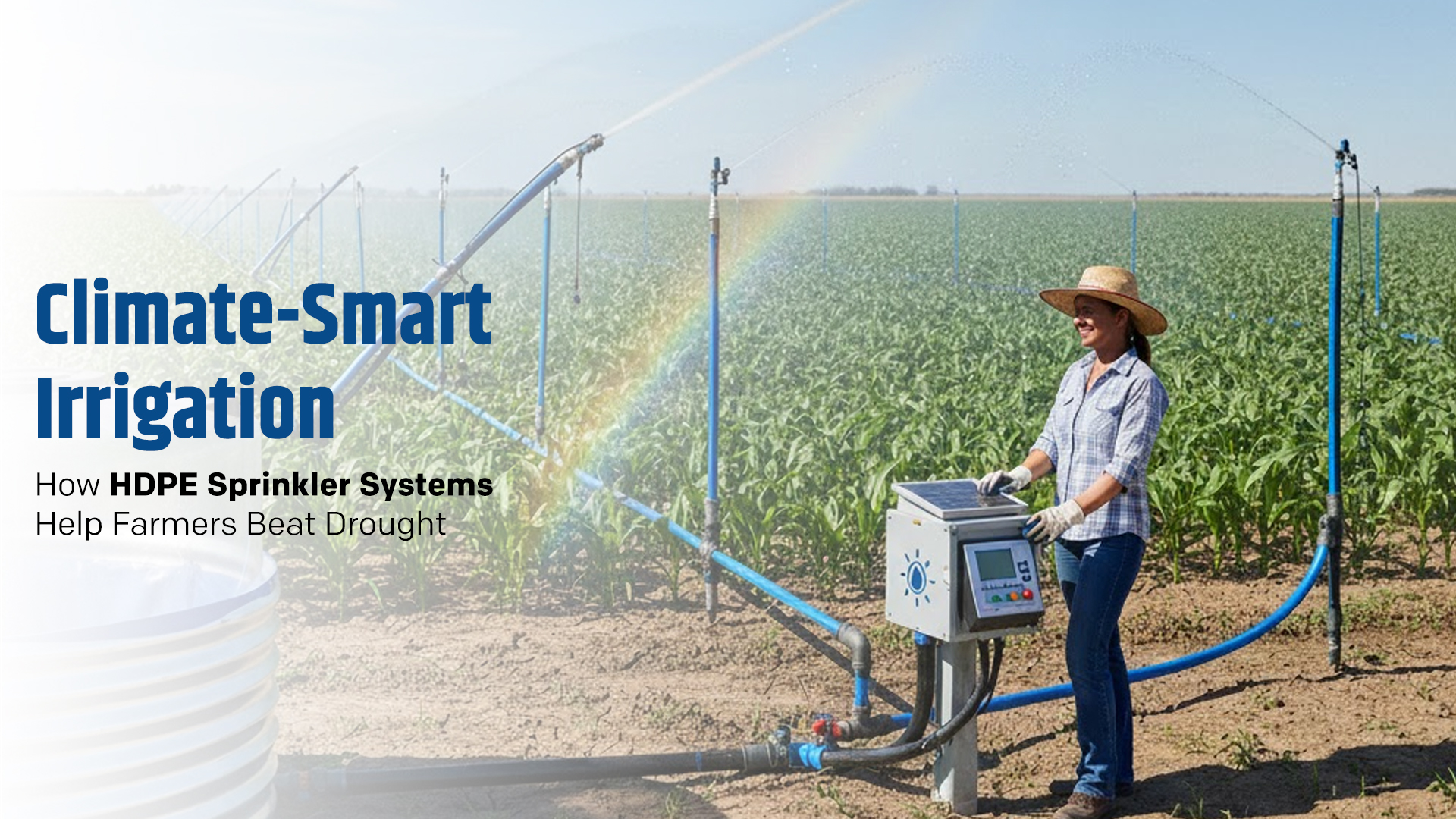
A drought is a major threat to any agriculture farm. It endangers crops and the livelihood of the farmer. As weather patterns shift, finding reliable ways to manage water is critical. Many common farming irrigation methods are no longer sufficient. They can waste a large amount of water. This is not sustainable.
A modern agriculture sprinkler system offers a solution. Systems built with HDPE pipes are designed for efficiency. This type of agriculture sprinkler irrigation delivers water where it is needed. It represents a practical step toward climate-smart farming. It helps to secure harvests even in dry conditions.
What is Climate-Smart Agriculture?
Climate-smart agriculture refers to a method of farming. The main aim is to resolve the issues of climate change and food safety. The objective is to change farming methods to improve productivity. This method is based on three fundamental goals:
- Boost Efficiency: Farmers must produce additional food on the existing acreage. This signifies consistently enhancing production.
- Enhance Durability: Farms must increase their strength to withstand climate adversities. This entails building strength towards drought, heat, and unpredictable climate situations.
- Decrease Emissions: When feasible, agriculture ought to diminish its ecological footprint. This includes handling resources effectively to minimize waste.
Effective water usage is essential to all three of these objectives. The way a farm handles its water influences aspects ranging from crop vitality to resource preservation. This is where contemporary agricultural irrigation techniques become essential. Improving to an agricultural Hdpe Sprinkler Fittings irrigation system is a straightforward application of climate-smart approaches. This is a beneficial step towards improving productivity in farming.
Why HDPE is the Ideal Material
Source _ Pinterest
The foundation of a contemporary agricultural sprinkler pipe fittings is the type of material utilized for the pipes. High-Density Polyethylene, commonly known as HDPE, is a form of plastic. It is different from the PVC utilized in certain construction projects. HDPE possesses distinct characteristics that render it particularly appropriate for agriculture.
The advantages of HDPE are practical and direct.
- It is durable. This material can withstand impact from farm equipment. It does not rust or corrode when exposed to water and soil chemicals. This leads to a long service life with minimal maintenance.
- It is flexible. HDPE pipes can bend and curve across uneven fields. This flexibility reduces the number of connectors and fittings required during installation.
- It creates a seamless system. Sections of HDPE pipe are joined using a heat-fusion process. This welds the pieces together to form a single, continuous line. The result is a permanent, leak-proof connection.
These material features result in immediate advantages for a sprinkler irrigation system. The power safeguards the investment. The adaptability streamlines configuration across different landscapes. The vital point is that the leak-proof joints ensure efficient water distribution, forming the foundation for a successful agricultural sprinkler irrigation system.
Advantages of HDPE Sprinkler Systems
The properties of HDPE material lead to direct, functional benefits for farmers, especially during dry conditions. This is where the technology moves from theory to practice.
1.Saves Water
The HDPE sprinkler system supplies water directly to the root area of the plant. Waterproof joints ensure that water reaches the plants instead of seeping into the ground.
2.Lasts for a Long Duration
HDPE material resists rust and corrosion. It is strong and can endure stress from farming equipment, leading to increased longevity.
3.Simple to Set Up
The tubes are bendable and light in weight. They are able to flex over irregular terrains, which decreases the number of fittings required.
4.Reduces Expenses
Utilizing reduced water results in decreased pumping expenses. The long-lasting material also needs less upkeep and fewer repairs in the long run.
5.Safeguards Plants
The system can serve purposes beyond merely watering. It can operate to shield plants from frost and to lower their temperature during severe heat.
Transitioning: Factors to Consider for Execution
Moving to a new agricultural sprinkler system necessitates careful planning. Grasping several important aspects will guarantee a seamless and effective installation.
The initial expense for an HDPE sprinkler irrigation system might be higher than that of some conventional agricultural irrigation methods. This expense covers the piping, sprinkler heads, and specialized fusion tools. It is important to see this not only as a transaction but also as a long-term investment in the farm’s future.
Proper installation is critical. Joining HDPE pipes requires specific heat-fusion techniques. This process creates the permanent, leak-proof seals that make the system so efficient. Training for farm staff or working with an experienced installer is necessary to get this right.
System design is another vital factor. A successful agriculture sprinkler irrigation layout must account for specific field conditions. These include:
- The shape and slope of the land.
- The type of crops being grown.
- The capacity of the water source.
The choice ultimately relies on a long-term viewpoint. Although the initial expense is a factor, the ROI arises from various sources. Reduced water usage decreases pumping expenses. Less maintenance conserves time and resources. The system’s dependability safeguards production during vital growing periods. For farms experiencing water shortages, these elements render a sprinkler irrigation system based on HDPE a strategic improvement in operations.
Conclusion
Implementing an agriculture sprinkler system made of HDPE signifies a practical change in irrigation techniques for farming. This method goes beyond just irrigating plants to overseeing a valuable resource with accuracy. The main advantages are evident: longevity, water conservation, and savings over time on operations.
This technology directly tackles the obstacles faced by contemporary agriculture. It offers a dependable resource for applying climate-smart practices on the farm. This type of agriculture sprinkler irrigation enhances resilience to drought by reducing waste and increasing control.
The choice to enhance irrigation systems is important. It represents a commitment to the farm’s reliability and future output. Shifting from inefficient farming irrigation techniques to a leak-proof, focused sprinkler irrigation system represents a move toward sustainable practices. It guarantees that each drop of water helps in a successful harvest.
For more than thirty years, Arihant Plast has been a reliable ally to Indian agriculture, focusing on innovative HDPE piping solutions. We aim to offer farmers robust, leak-resistant, and extremely efficient systems that serve as the foundation of a contemporary sprinkler irrigation setup. On our website, you can discover our selection of products aimed at enhancing water efficiency, lowering operational expenses, and fostering resilience to drought conditions. We encourage you to reach out to our team for a consultation to identify the perfect agricultural sprinkler system for your unique land and crop needs.