

Water leakage is a persistent issue. It wastes a critical resource. It causes expensive damage to property and infrastructure. The root cause of most leaks is not the pipe itself. It is the point where two pieces connect. For decades, the search for a perfect, durable connection has driven plumbing innovation. Two solutions have proven exceptionally effective: the brass ferrule for metal pipes and HDPE fittings for plastic systems. They address leakage at its source through intelligent design.
Where Leaks Usually Start
Image Source-Freepik
Understanding the failure points is key. Leaks occur due to material weakness or connection stress.
- Joints and connections fail first.
Threaded joints rely on sealant tape or compound. These materials degrade over time. Threads can also corrode. They may be over-tightened. This causes cracks or under-tightened, leaving gaps. Soldered joints, common in copper pipes, can fail if not perfectly prepared. A poorly soldered joint is weak. Vibration from daily use can fracture it. - Physical and environmental stress are ongoing problems.
Galvanic corrosion occurs when dissimilar metals, such as copper and steel, are linked. The metal is eroded by this corrosion. Water hammer is a shockwave caused by suddenly stopping water flow. This shock can crack fittings and loosen joints. Temperature changes make pipes expand and contract. Rigid connections cannot handle this movement. Stress builds until a leak forms. Underground pipes face soil movement and pressure from above. This can shear or pull apart standard joints.
These problems demand solutions that are resilient, adaptable, and simple.
The Brass Ferrule: A Small Part with a Big Job
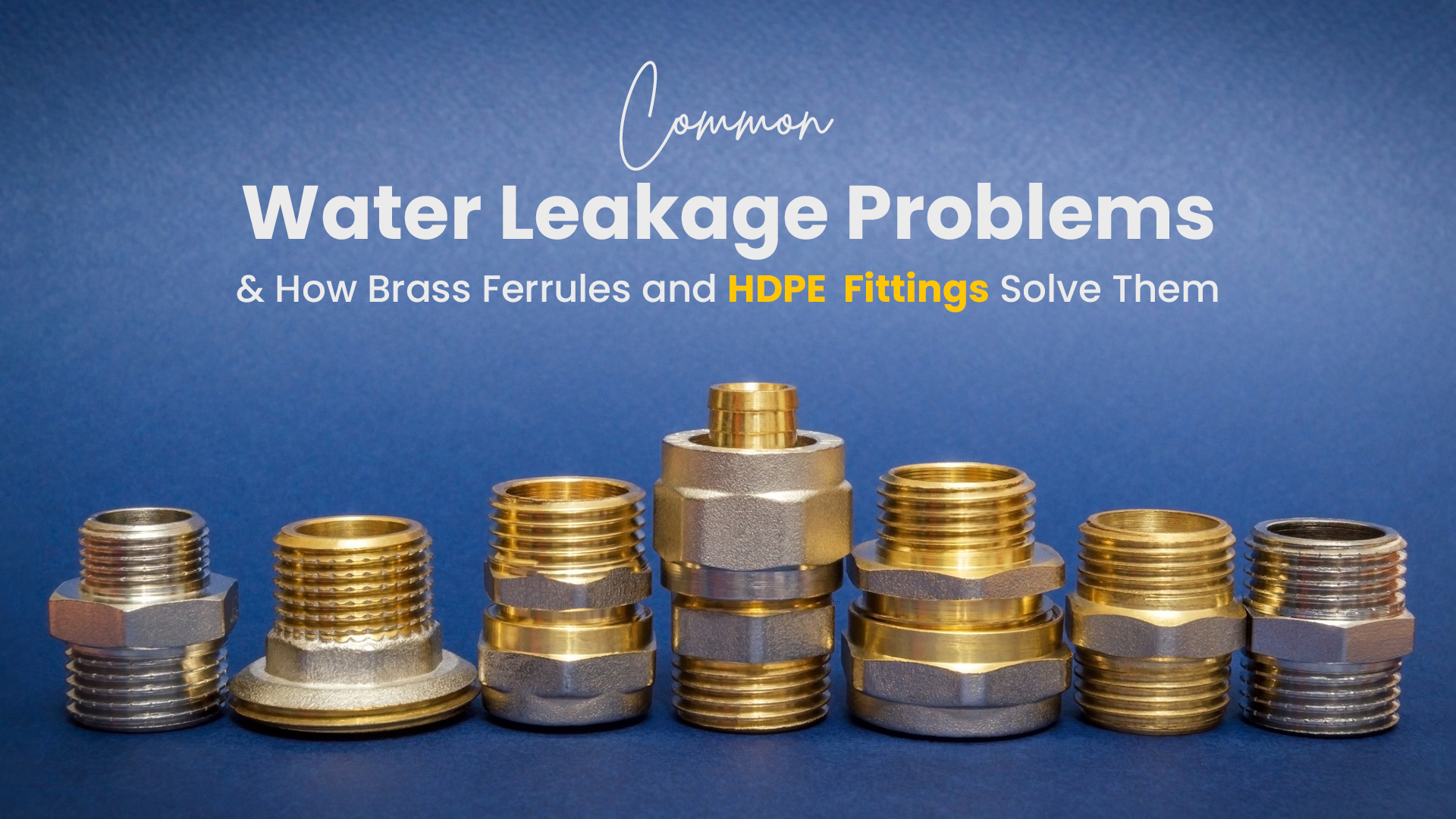
A brass ferrule is a simple component. It is a small, ring-shaped piece of brass, often called an ‘olive’. It is used inside a compression fitting. When the fitting’s nut is tightened, it squeezes this brass ring against the pipe and into the fitting body. This action is the core of its reliability.
- It creates a superior mechanical seal.
The brass is softer than the pipe metal. As it compresses, it flows into the microscopic imperfections on the pipe’s surface. It also fills the grooves of the fitting. This creates a custom, metal-to-metal seal. No two seals are exactly alike. Each one conforms perfectly to the specific pieces it connects. This eliminates the gaps where water can escape.
- It resists loosening.
The ferrule grips the pipe’s outer surface with significant force. This grip dampens vibrations from pumps or water flow. The connection stays tight. It is less likely to back out from constant subtle movement. - It is durable and simple.
Brass resists corrosion from water and minerals. The seal itself is metal. So it does not dry out or degrade like a rubber washer. Installation requires only two wrenches. There is no need for open flames, solder, or glue. This reduces installation error. A properly made compression joint is reliable for decades.
Brass ferrules solve leaks in traditional metal plumbing. They are ideal for repairs, connecting to existing copper or steel lines, and indoor applications.
HDPE Fittings: A Unified System for Modern Pipes
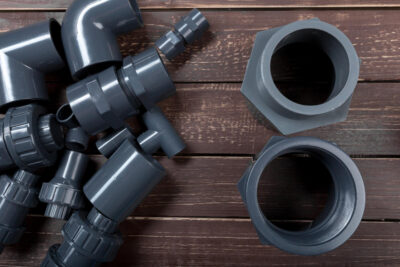
HDPE stands for High-Density Polyethylene. It is a tough, flexible plastic pipe material. The true innovation is not just the pipe, but how it connects. HDPE fittings use heat fusion. This process turns separate pieces into one single, continuous piece of plastic.
- Heat fusion eliminates the joint.
The connection point is no longer a potential weakness. It becomes the strongest part of the system. There are two main methods. Butt fusion joins pipe to pipe or pipe to fitting by heating the ends and pressing them together. Electrofusion uses fittings with built-in heating elements. A control box heats the joint to a precise temperature. The melted HDPE cools uniformly in both situations. There is no seam, thread, or seal; thus, the water cannot find a way to leak. - The material handles environmental stress.
HDPE doesn’t react chemically. It doesn’t experience galvanic corrosion or rust. It is able to flex and bend without breaking. Because of its adaptability, it can withstand water hammer, freeze-thaw cycles, and ground settlement. The system moves with stress instead of fighting it. This protects the fused joints from strain. - The result is long-term integrity.
A correctly fused HDPE system has a service life measured over 50 years. The smooth interior does not scale or build up deposits. The entire network functions as a single, leak-resistant unit. This makes HDPE the standard for buried applications. It is used for municipal water mains, agricultural irrigation, and industrial projects.
Choosing the Correct Solution
The choice between brass ferrules and HDPE fittings depends on the project.
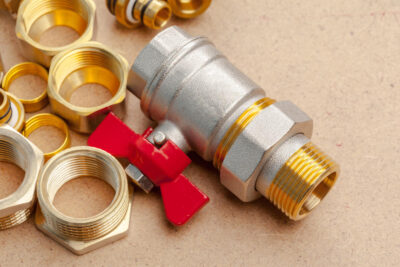
- Select brass compression fittings with ferrules for work with existing copper, steel, or brass pipes. Use them for indoor plumbing repairs, gas lines, and smaller-diameter projects. Their disassembly might be needed in the future.
- Select HDPE and its fusion fittings for new, buried installations. This includes main water supply lines, landscape irrigation, and any project requiring long runs of pipe. It is the best choice for harsh soils or where corrosion is a primary concern.
Both technologies offer a direct response to the most common leakage problems. They move beyond simply patching a connection. They engineer the connection point to be fundamentally resilient.
Conclusion
Water leakage stems from a connection failure. Traditional methods are vulnerable to time, stress, and chemistry. The brass ferrule addresses this by creating an intelligent, deformable metal seal that locks itself in place. HDPE fittings take a more definitive approach. They remove the concept of a separate joint entirely through fusion.
Specifying these solutions is a practical decision. It prioritizes long-term performance over short-term convenience. It acknowledges that a reliable water system depends on the strength of every connection. By solving the connection, we solve the leak.