

The Ultimate Guide to Choosing a Reliable HDPE Pipe Fittings Supplier
Choosing where to buy HDPE pipe fittings is not a minor task. It is a critical decision. The right supplier ensures your project is built to last. The wrong one can lead to delays, leaks, and costly repairs.
Think of it this way. You can have the best plan and the best team. But if your HDPE pipe fittings fail, the entire system is at risk. This makes your choice of HDPE pipe fittings manufacturers or HDPE pipe fittings suppliers a cornerstone of project success.
Your supplier provides more than just parts. They provide assurance. They guarantee the material is strong. They guarantee it is certified. They guarantee it arrives when you need it. A reliable partner prevents issues. An unreliable one creates them.
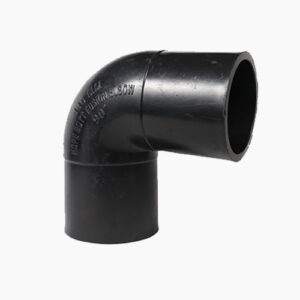
Foundational Pillars: Key Factors for Evaluating a Supplier
To find a good partner, you need to know what to check. Do not just look at the catalog or the price list. Look deeper. The best HDPE pipe fittings manufacturers are defined by a few key areas. These are the pillars that hold up their reliability.
1. Examine the product itself.
Material Grade: HDPE fittings are made from different types of polyethylene, like PE 100. You must confirm the grade. It determines the fitting’s strength and pressure rating.
Standards: In India, a trustworthy HDPE pipe fittings supplier will follow BIS standards. Specifically, ask if their products conform to IS 14333 for fittings. This is a basic mark of quality and safety.
2. Ask for proof.
Certificates are not just papers. A BIS license and ISO 9001 certification show a company follows a system. They take their process seriously.
Always request test reports. A good manufacturer will provide hydrostatic pressure test results and material property sheets for the batch you are buying. This proves the fittings are tested.
3. Consider how they operate.
Where are the fittings made? Manufacturers with their own plant have more control over quality than a trader who just resells.
Check if they have testing machines on-site. This allows for constant quality checks during production.
4. Evaluate their service.
Can they deliver on time? Do they have technical staff who can answer installation questions? A supplier is a source of both products and support. Checking these points takes work. But this work is the only way to find a real partner for your project, not just a seller.
Warning Signs of an Unreliable Supplier
It’s good to know what makes a great supplier. But it’s even more important to see the warning signs of a bad one. Certain signals should make you stop. They are red flags. Catching them early prevents big trouble.
Here are specific warning signs.
- They avoid sharing documents. If they cannot quickly provide a BIS license or test certificates, be cautious. Reliable HDPE pipe fittings manufacturers are proud of their compliance and ready to show proof.
- The price seems too good. A quote that is much lower than all others is not a bargain. It is often a sign of compromised material quality or a lack of proper testing. Quality raw materials and processes have a real cost.
- Their story is vague. Find out where the fittings are manufactured. They might just be a middleman with no control over production if the response is ambiguous or if they are unable to schedule a visit to the plant.
- They lack references. A trustworthy supplier should be able to name recent projects or provide contacts of past clients. If they have no history of successful work, you are taking a significant risk.
- There is no support. Notice if they offer technical guidance on installation or jointing methods. If their interaction ends with the sale, you will have no help if issues arise on-site.
These signs point to a vendor, not a partner. Your goal is to find a partner. A vendor sells you a product and moves on. A partner ensures that the product works correctly in your system. Spotting these warnings is an important skill. This skill protects your project’s schedule, your money, and the quality of your finished work. When you see a red flag, it is a clear signal. It is smart to carefully review your other choices.
Making the Final Decision: A Guide for Contractors & Builders
You have done your research. You have a shortlist of potential HDPE pipe fittings manufacturers and have checked for red flags. Now comes the final, practical step of choosing your partner. This process is about moving from information to action.
Follow these steps to make a confident choice.
- First, narrow your list. Only consider HDPE pipe fittings supplier candidates who have shown you valid BIS and quality certificates. This is your baseline. If they cannot meet this, they do not proceed.
- Next, go beyond the paperwork. Request physical samples of the specific fittings you will use. Examine the finish and the markings. Ask for the batch test reports for those samples. Seeing and touching the product matters.
- If your project is large or critical, visit the manufacturing plant. A tour tells you more than a dozen brochures. You can see their machinery, their housekeeping, and their testing process firsthand. Genuine manufacturers are usually open to this.
- Now, test their service. Send a detailed technical query. Gauge their response time and the expertise in their answer. A good partner will have knowledgeable staff who can clarify your doubts. Notice how they communicate.
- This final stage is about looking at the complete picture. The lowest price is often the loudest, but you must listen to other details. Here is the key distinction
1. You are choosing a partner, not a product.
2. Do not select a supplier based on cost alone. Evaluate their total value.
3. Consider these questions:
4. Can they guarantee on-time delivery?
5. Will they provide technical support if an issue arises on site?
6. What does their product warranty actually cover? - A good HDPE pipe fittings supplier might have a slightly higher rate. This investment usually pays for itself. It prevents the far greater costs of project delays, failed joints, and emergency call-backs.
- The final, crucial step is to verify their track record. Request two or three references from projects similar to yours. A brief conversation with a past client is revealing. You will learn about their real-world reliability and how they solve problems.
This step-by-step method makes a hard choice easier. It changes your goal. You stop looking for the lowest price. You start looking for the best partner for your project’s success.
Conclusion: Partnering for Success
Selecting the right HDPE pipe fittings supplier is a foundational project task. It is not a simple purchase. It is the choice of a business partner who shares responsibility for your project’s outcome.
The best HDPE pipe fittings manufacturers know what this partnership means. They don’t just sell parts. They provide something more important: confidence. You can be confident in their material quality. You can be confident their products meet the required standards. You can be confident they will support you. This confidence protects your project schedule, your money, and your good name.
Spending time to check a supplier carefully is not wasted time. It is a necessary step. It stops expensive problems from happening later. Their process and their commitment to quality must meet your standards for reliability.
This careful selection process builds a relationship for the long term. You gain a trusted source, not just for one project, but for many. You secure a partner committed to ensuring that every joint holds, every system functions, and every project you build is a success.