


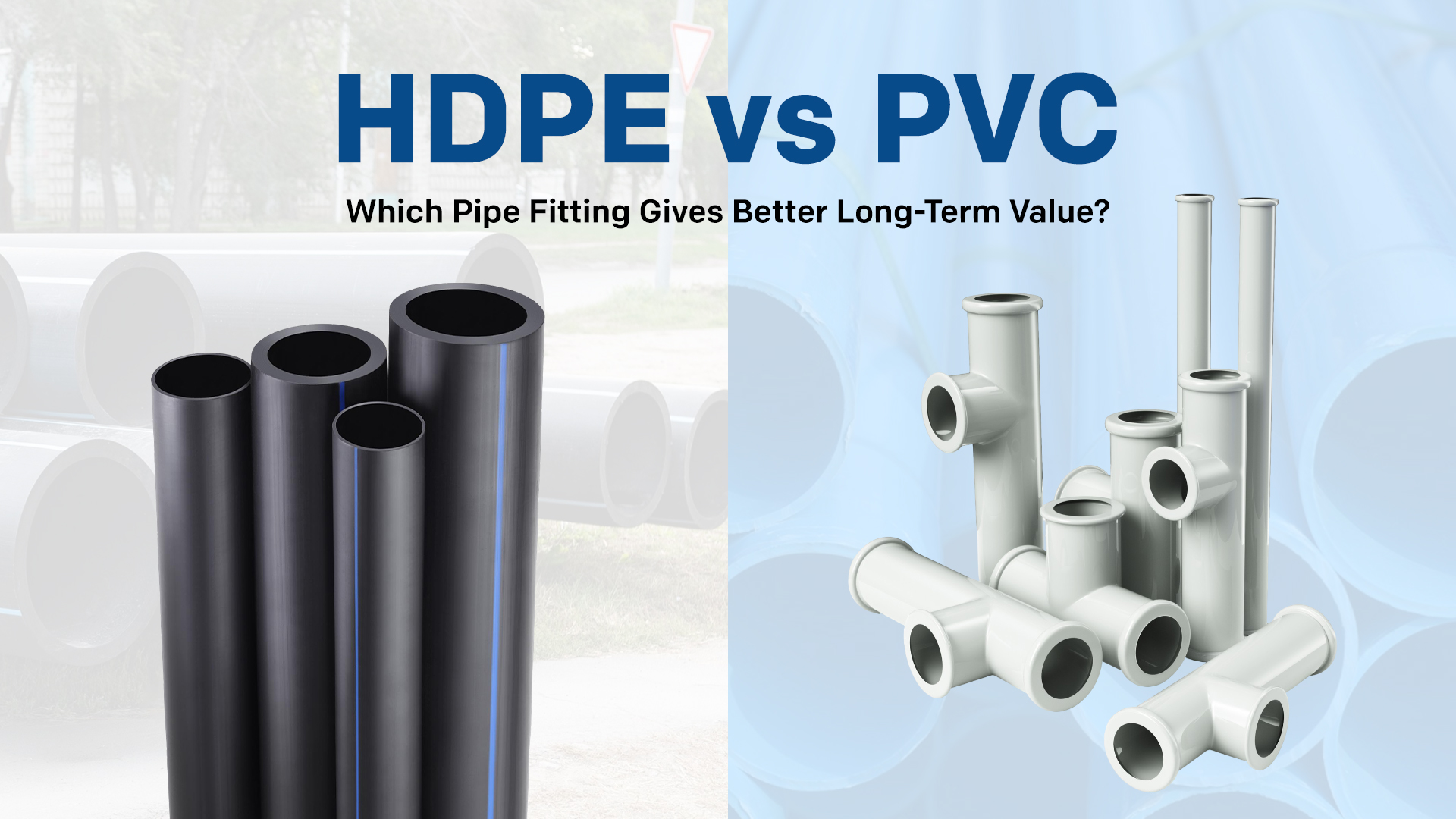
Selecting the material is a crucial choice when designing a piping system. Two of the most frequently used materials are HDPE and PVC. Although both are kinds of plastic tubing, they have unique features that render them appropriate for various uses.
Experts in various fields frequently evaluate HDPE and PVC to find the most suitable option for their initiatives. This examination goes beyond the starting cost. It includes a comprehensive examination of lasting performance and overall worth.
Choosing between an HDPE pipe fitting and a PVC pipe fitting can influence a project’s success for many years. This highlights the importance of dependable HDPE fittings manufacturers and an experienced HDPE pipe fittings supplier. Arihant Plast supplies the necessary resources and knowledge needed for a proper installation of HDPE pipes.
Material Showdown: Breaking Down the Key Properties
To understand the long-term value in the HDPE vs PVC debate, we must examine their core material properties. These properties dictate how each pipe performs after installation.
1.Durability and Impact Strength
HDPE pipe fitting is known for its toughness. The material is flexible. It can bend without breaking. This ductile nature allows it to withstand impacts during handling. It also absorbs ground movement once buried. It resists cracking under stress.
PVC pipe fitting is rigid and strong, but it is more brittle. It can crack if dropped or hit with a sharp object. This is an important consideration for sites with rocky soil or potential for point loads.
The difference is clear. HDPE bends under pressure, while PVC is more likely to fracture.
2.Pressure Handling and Fatigue
HDPE has a high resistance to fatigue. It can handle repeated pressure surges very well. It can handle the pressure like those from pump starts and stops. The pipe’s rating for surge pressure is significantly higher than its standard working pressure.
PVC has a high initial pressure rating. However, its rigid structure is less effective at handling repeated pressure cycles over many years. These cycles can lead to fatigue and potential failure at the joints over time.
3.Temperature and Chemical Resistance
The operating environment affects pipe performance.
Temperature: HDPE performs well in cold conditions. It retains its flexibility. PVC can become more brittle in freezing temperatures. Both have limits for hot water. PVC typically handles slightly higher maximum temperatures.
Chemical Resistance: Both materials resist corrosion. HDPE is highly inert, making it a preferred choice for potable water. It resists a very wide range of acids, bases, and salts. PVC also has good chemical resistance, but can be damaged by certain strong solvents.
This analysis of material science guides HDPE fittings manufacturers in producing components for specific challenges. A good HDPE pipe fittings supplier can provide details on which material is suited for your specific need.
Initial Investment vs. Lifetime Value
The choice between HDPE and PVC often comes down to cost. It is important to look beyond the price tag. The total cost includes installation, maintenance, and how long the system lasts.
1.Initial Installed Cost
PVC pipe fittings often have a lower material cost. This makes it an attractive option for a tight initial budget.
However, installation methods affect the final cost.
- PVC systems require primer and solvent cement to glue joints together.
- HDPE pipe fitting uses heat fusion to weld pieces into a continuous line.
The equipment for HDPE fusion represents an initial investment. Yet, the speed and efficiency of the process can offset this cost on larger projects.
2.Lifetime and Maintenance Cost
The true value of a piping system is measured over decades.
HDPE systems are recognized for their extended durability. The joined connections are continuous and free from leaks. This removes a frequent failure point. The material’s adaptability and resistance to fatigue ensure it seldom requires repair or replacement. You invest more initially in a system that could endure for 50 to 100 years with little maintenance.
PVC systems are likewise long-lasting. However, the bonded connections are possible weak spots. Changes in the earth or variations in pressure can lead to leaks over time. Repairs can be bothersome and costly. They often require digging and replacing sections.
Environmental and Installation Considerations
The impact of a piping system extends beyond its performance and cost. How it is installed and its effect on the environment are also key factors in the HDPE vs PVC discussion.
Environmental Impact
HDPE and PVC are types of plastic, yet their environmental impacts vary.
HDPE is acknowledged for its ecological durability. It is a non-reactive substance. It doesn’t interact with the soil or water it transports. This ensures it is a reliable option for drinking water pipes. HDPE is extensively recycled as well. Its straightforward chemical composition makes it a prevalent material in recycling initiatives.
PVC has an alternative composition. The process of its production includes chlorine. PVC is inherently stable. Nonetheless, discussions occasionally center on its lifecycle from creation to disposal. The two materials are resilient. This alone provides an environmental advantage, since durable items decrease waste.
Installation and Joint Integrity
The method of installing pipes affects project time, cost, and long-term reliability.
HDPE pipe fitting is installed using heat fusion. This process welds the pipe and fittings together into a single, continuous piece. The resulting joint is as strong as the pipe itself. It is completely leak-free. This method also allows for trenchless installation techniques. This minimizes surface disruption. It is ideal for going under roads or landscapes.
PVC pipe fitting uses a different approach. Sections of pipe are joined with solvent cement. It chemically welds the plastic. While effective, these glued joints can be potential weak points over time. The installation is also rigid. It requires more precise trenching.
The installation advantages of HDPE are clear:
- Leak-free system: Fused joints eliminate the most common source of pipeline failure.
- Installation flexibility: Can be used in trenchless methods, reducing restoration costs.
- Fewer failure points: The monolithic system is more resilient to ground shifts.
Expert Analysis
Upon examining the characteristics, expenses, and installation techniques, we can reach a definitive conclusion. The decision between HDPE and PVC does not hinge on which material is superior in every situation. It is all about having the right tool for the particular task.
HDPE pipe fitting offers superior fatigue resistance. Its molecular structure allows it to absorb pressure surges and ground movement over decades without failing. The most significant advantage is the joint. A thermally fused HDPE joint creates a monolithic system, eliminating the weakest link found in assembled pipelines.
PVC pipe fitting provides high static strength at a lower initial cost. Its rigidity is an advantage in stable, above-ground applications. Their precise alignment is needed. However, its brittle nature makes it more susceptible to impact damage and fatigue over time.
Final Recommendation
Your project’s requirements will determine the best material. Here is a practical guide:
Choose HDPE pipe fittings for these applications
- Buried water mains and pressurized systems.
- Projects in areas with unstable soil or seismic activity.
- Systems with frequent pump cycles or pressure changes.
- Trenchless installations require directional drilling.
- Conveying aggressive chemicals or potable water.
Choose PVC pipe fittings for these applications:
- Gravity-flow sewer and drainage systems.
- Low-pressure irrigation lines.
- Projects with a very constrained initial budget.
- Above-ground vents and drains are preferred where rigidity is required.
For more than thirty years, Arihant Plast has built its reputation as a reliable manufacturer and supplier of top-quality HDPE pipe fittings. The company is founded on a dedication to right engineering and strict quality control. Each of our parts complies with demanding industry standards. Through a wide array of products and strong technical assistance, Arihant Plast enables its customers to construct reliable leak-proof piping systems. We offer access to dependable products and professional advice.